

Champagne Wine Region Map: Vineyards & Subregions

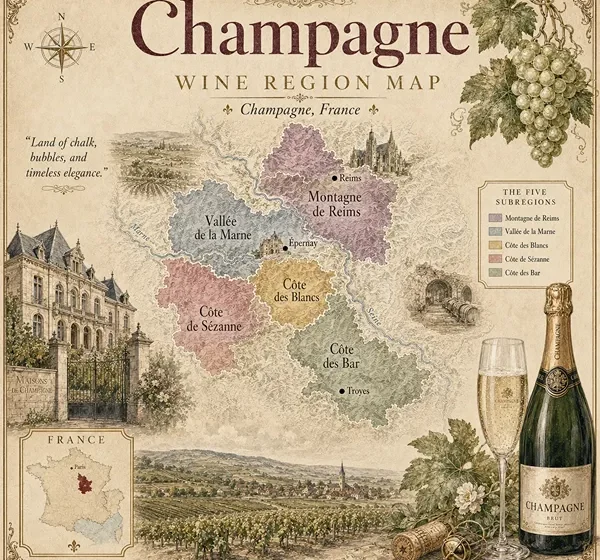
Champagne is one of the most prestigious wine regions in the world, renowned for producing the only sparkling wine legally allowed to bear the name “Champagne.” Located in northeastern France, this historic region combines unique terroir, centuries of winemaking expertise, and a complex network of vineyards spread across several distinct subregions. Understanding a champagne wine region map is essential for wine lovers, travelers, and enthusiasts who want to explore the origins of these celebrated wines.
Why a Champagne Wine Region Map Matters
A detailed champagne wine region map helps visitors and wine enthusiasts understand the geography behind Champagne production. Unlike many wine regions that focus on a single area, Champagne consists of multiple subregions, each contributing unique characteristics to the final blend.
The region lies approximately 150 kilometers east of Paris and covers more than 34,000 hectares of vineyards. Its cool climate and chalk-rich soils create ideal conditions for producing sparkling wines with exceptional acidity, elegance, and aging potential.
When examining a Champagne map, you’ll notice that vineyards are concentrated around key towns such as Reims, Épernay, and Troyes. These locations serve as the heart of Champagne’s wine culture and tourism.
Map Champagne Wine Region France: Main Subregions Explained
When looking at a map champagne wine region france, five major vineyard areas stand out. Each subregion contributes different grape characteristics that help create the diversity found in Champagne wines.
Montagne de Reims
Located south of Reims, Montagne de Reims is one of the most famous areas in Champagne. This subregion is known primarily for Pinot Noir vineyards, producing wines with structure, power, and aging potential.
Many prestigious villages are located here, including Bouzy and Verzenay. The wines often add body and complexity to Champagne blends.
Vallée de la Marne
Stretching along the Marne River, this subregion is heavily planted with Pinot Meunier. The wines from Vallée de la Marne are typically fruit-forward, approachable, and aromatic.
Épernay, one of Champagne’s most important towns, is located in this area and serves as a major center for Champagne production and tourism.
Côte des Blancs
The Côte des Blancs is considered the spiritual home of Chardonnay in Champagne. Villages such as Avize, Cramant, and Le Mesnil-sur-Oger are internationally recognized for producing some of the world’s finest Chardonnay grapes.
Champagnes from this area are often characterized by freshness, minerality, elegance, and remarkable aging capacity.
Côte de Sézanne
Situated south of the Côte des Blancs, this smaller subregion is also dominated by Chardonnay. The wines tend to be softer and more approachable while still maintaining the signature freshness associated with Champagne.
Côte des Bar (Aube)
Located in the southern part of Champagne near Troyes, Côte des Bar has gained increasing recognition over recent decades. Pinot Noir dominates the vineyards here, benefiting from clay-limestone soils that differ from the chalk-rich terroir of northern Champagne.
Many grower-producers have emerged from this region, creating highly distinctive Champagnes with strong regional identity.
Understanding Champagne’s Unique Terroir
One of the most important features visible on any champagne wine region map is the distribution of vineyard soils. Champagne’s famous chalk subsoil acts as a natural water reservoir while providing excellent drainage.
This geological foundation plays a crucial role in maintaining acidity and freshness in the grapes. Combined with the region’s cool climate, these conditions help create the vibrant base wines required for high-quality sparkling wine production.
The terroir varies significantly between subregions, explaining why Champagne producers often blend wines from different areas to achieve balance and complexity.
The Three Main Champagne Grape Varieties
A Champagne wine map becomes even more meaningful when you understand the grapes grown in each area.
Chardonnay
Chardonnay contributes elegance, citrus notes, floral aromas, and minerality. It dominates the Côte des Blancs and forms the basis of Blanc de Blancs Champagne.
Pinot Noir
Pinot Noir provides body, structure, red fruit flavors, and aging potential. It thrives in Montagne de Reims and Côte des Bar.
Pinot Meunier
Pinot Meunier adds fruitiness, freshness, and early-drinking appeal. It is especially important in Vallée de la Marne.
Together, these three grape varieties form the backbone of most Champagne blends.
Major Cities on the Champagne Wine Region Map
Reims
Reims is often considered the unofficial capital of Champagne. It features historic landmarks, renowned Champagne houses, and easy access to the surrounding vineyards.
Épernay
Known for its famous Avenue de Champagne, Épernay hosts numerous prestigious producers and serves as an ideal starting point for vineyard exploration.
Troyes
Located near the Côte des Bar, Troyes offers visitors a different perspective on Champagne, combining medieval architecture with access to one of the region’s fastest-growing wine areas.
Planning a Champagne Wine Tour Using a Map
A well-designed champagne wine region map is an invaluable tool when planning a wine tour. It helps visitors understand travel distances, identify key vineyard areas, and create efficient itineraries.
Many travelers focus on Reims and Épernay, but exploring Côte des Blancs, Vallée de la Marne, and Côte des Bar provides a much deeper understanding of Champagne’s diversity.
By following the vineyard routes shown on regional maps, visitors can discover small grower-producers, historic villages, scenic landscapes, and exceptional tasting opportunities beyond the famous Champagne houses.
What Are the 5 Regions of Champagne?
The Champagne wine region is divided into five primary subregions, each contributing unique characteristics to the wines produced there. Understanding these areas is essential when reading a champagne wine region map because each region specializes in different grape varieties and wine styles.
The first and most famous area is Montagne de Reims, located south of the city of Reims. This region is known for its Pinot Noir vineyards, which produce wines with structure, depth, and aging potential. Many Grand Cru villages are located here, making it one of the most prestigious parts of Champagne.
The second region is Vallée de la Marne, which follows the Marne River and is particularly well suited to Pinot Meunier. Wines from this area often display fruit-forward aromas and approachable flavors, making them an important component in many Champagne blends.
The third region is Côte des Blancs, famous for its Chardonnay vineyards. This area produces elegant, mineral-driven wines that form the basis of many premium Blanc de Blancs Champagnes.
The fourth region is Côte de Sézanne, located south of the Côte des Blancs. Although smaller, it also focuses heavily on Chardonnay and contributes freshness and delicate fruit characteristics.
Finally, there is Côte des Bar, also known as Aube, in the southern part of the Champagne appellation. This region has gained significant attention in recent years thanks to its outstanding Pinot Noir wines and innovative grower-producers.
Together, these five regions create the diversity that makes Champagne one of the world’s most respected wine regions. A detailed champagne wine region map helps visitors understand how geography influences the style and personality of every bottle.
Where Is the Champagne Wine Region Located?
The Champagne wine region is located in northeastern France, approximately 150 kilometers (93 miles) east of Paris. It sits within the Grand Est administrative region and surrounds the historic cities of Reims, Épernay, and Troyes. The area’s unique location plays a critical role in the production of world-famous Champagne wines.
Champagne lies near the northern limit of viable wine growing in Europe. Because of its cool climate, grapes ripen slowly, preserving the high acidity necessary for producing premium sparkling wine. This natural acidity is one of the defining characteristics that distinguishes Champagne from other sparkling wines around the world.
The region covers more than 34,000 hectares of vineyards spread across several subregions, including Montagne de Reims, Vallée de la Marne, Côte des Blancs, Côte de Sézanne, and Côte des Bar. Each area possesses distinct soils, elevations, and microclimates that influence grape development.
One of Champagne’s most important geological features is its chalk-rich soil. These ancient chalk deposits provide excellent drainage while retaining enough moisture to support vines during dry periods. The chalk also contributes to the minerality and freshness often associated with high-quality Champagne.
For wine travelers, Champagne is one of the most accessible wine regions in France. Its proximity to Paris makes it possible to visit for a day trip, although many visitors choose to stay several days to explore vineyards, wineries, and historic towns. Any comprehensive champagne wine region map will clearly show how close the region is to the French capital and how easily accessible it is by train or car.
How Close Is the Champagne Region to Paris?
One of the reasons Champagne is such a popular destination is its close proximity to Paris. The heart of the Champagne region begins approximately 150 kilometers (93 miles) east of the French capital, making it one of the easiest wine regions in France to visit.
Travelers can reach Reims, often considered the gateway to Champagne, in as little as 45 minutes by high-speed train from Paris. This convenient connection allows visitors to enjoy vineyard tours, cellar visits, and wine tastings without requiring an extended vacation.
By car, the journey typically takes between 1.5 and 2 hours, depending on traffic and the specific destination within Champagne. Visitors who want to explore multiple subregions often prefer renting a vehicle, as it provides greater flexibility for visiting smaller villages and boutique producers.
The short distance from Paris has played an important role in Champagne’s history. For centuries, wealthy merchants, aristocrats, and international visitors traveling through the French capital could easily access the vineyards of Champagne. This helped establish the region’s reputation and contributed to the global success of its wines.
Today, many travelers include Champagne as part of a broader French itinerary. A day trip can cover Reims and Épernay, while a longer stay allows visitors to discover lesser-known areas such as Côte des Blancs and Côte des Bar. Thanks to its accessibility, Champagne remains one of Europe’s most rewarding wine tourism destinations.
What Is the Best Town to Visit in the Champagne Region?
Choosing the best town to visit in Champagne depends on your interests, but most wine enthusiasts agree that Reims and Épernay are the region’s two must-see destinations.
Reims is often considered the cultural and historical capital of Champagne. The city is home to magnificent architecture, renowned Champagne houses, and one of France’s most important Gothic cathedrals. Visitors can enjoy a combination of history, gastronomy, and wine experiences all within a compact and walkable city center.
Épernay, on the other hand, is regarded as the wine capital of Champagne. Its famous Avenue de Champagne is lined with prestigious producers and extensive underground cellars. The town offers a more intimate atmosphere and direct access to surrounding vineyards.
For travelers seeking a deeper connection to the region, smaller villages such as Hautvillers, Avize, and Bouzy are also excellent choices. These communities provide a closer look at vineyard life and often feature family-owned wineries where visitors can enjoy personalized tastings.
If you only have one day available, Reims is usually the best choice because it combines historical attractions with easy access to numerous Champagne houses. However, wine-focused visitors often prefer Épernay because of its concentration of producers and vineyard scenery.
Ultimately, the best town depends on whether your priority is history, wine tasting, local culture, or scenic vineyard landscapes.
What to See in Reims in One Day?
If you have only one day in Reims, it is possible to experience many of the city’s highlights while also enjoying the world of Champagne. The ideal itinerary combines history, architecture, gastronomy, and wine.
Begin your day at Notre-Dame de Reims Cathedral, one of France’s most important Gothic landmarks. For centuries, French kings were crowned here, making it a symbol of national history. The cathedral’s stunning stained glass windows and intricate architecture are worth exploring in detail.
Next, walk through the historic city center, where you can admire elegant squares, local boutiques, and traditional cafés. Reims offers an attractive blend of history and modern French lifestyle.
No visit would be complete without touring at least one Champagne house. Many producers offer guided cellar visits where guests can learn about traditional Champagne production, explore underground chalk cellars, and participate in tastings. These experiences provide valuable insight into the craftsmanship behind every bottle.
For lunch, enjoy regional specialties paired with local Champagne. Reims is known for its excellent gastronomy, and many restaurants feature menus designed to complement sparkling wines.
In the afternoon, consider visiting additional wineries or taking a short excursion into the surrounding vineyards of Montagne de Reims. The rolling landscapes and picturesque villages provide some of the most beautiful scenery in the region.
Even with just one day, Reims offers an unforgettable introduction to Champagne’s history, culture, and winemaking heritage.
Champagne Region Name
The Champagne region is one of the most recognizable wine-producing areas in the world, and its name carries extraordinary significance. Located in northeastern France, Champagne is the only region legally permitted to produce sparkling wine labeled as “Champagne” under European and international appellation laws. This protection has helped preserve the reputation, authenticity, and prestige associated with the region for centuries.
The name “Champagne” originates from the Latin word Campania, meaning open countryside or plain. This term was used by the Romans to describe the rolling landscapes of the area. Over time, the name became closely linked to the wines produced there and eventually evolved into one of the strongest geographical brands in the global wine industry.
Today, the Champagne appellation encompasses several important subregions, including Montagne de Reims, Vallée de la Marne, Côte des Blancs, Côte de Sézanne, and Côte des Bar. Although these areas differ significantly in terroir and grape varieties, they all fall under the protected Champagne designation.
The importance of the Champagne region name extends beyond wine production. It represents centuries of tradition, strict quality standards, and a unique combination of climate, soil, and winemaking expertise. Because of this reputation, producers in other countries are generally prohibited from using the name Champagne on their labels, even when producing sparkling wine using similar methods.
For travelers studying a champagne wine region map, understanding the significance of the Champagne name helps explain why this region remains one of the most visited and admired wine destinations in the world.
Champagne Region Size
The Champagne wine region covers approximately 34,000 hectares (around 84,000 acres) of vineyards spread across northeastern France. While this may seem relatively small compared to some of the world’s largest wine regions, Champagne’s influence on the global wine industry is enormous.
The vineyards are distributed across five major subregions: Montagne de Reims, Vallée de la Marne, Côte des Blancs, Côte de Sézanne, and Côte des Bar. Each area contributes unique grape characteristics that are essential to the production of Champagne. When examining a champagne wine region map, visitors often notice how these vineyard zones are spread across a broad geographical area rather than concentrated in a single location.
Despite its modest size, Champagne produces approximately 300 million bottles annually. This remarkable output is possible thanks to a combination of efficient vineyard management, centuries of viticultural experience, and strong global demand.
The region’s vineyards stretch across more than 300 villages, many of which have a long history of grape growing. Some of the most famous villages, including Avize, Bouzy, Verzenay, and Le Mesnil-sur-Oger, have earned international recognition for the quality of their vineyards and wines.
Champagne’s vineyard area is tightly regulated by the Appellation d’Origine Contrôlée (AOC) system. Strict rules govern planting, harvesting, production methods, and vineyard boundaries to maintain quality standards and protect the reputation of the region.
Although Champagne is smaller than many other famous wine-producing areas, its combination of terroir, history, and prestige has made it one of the most influential wine regions on the planet. Understanding the size and layout of Champagne helps visitors better appreciate the complexity shown on any detailed champagne wine region map.
