

Visiting the Douro Valley Vineyards

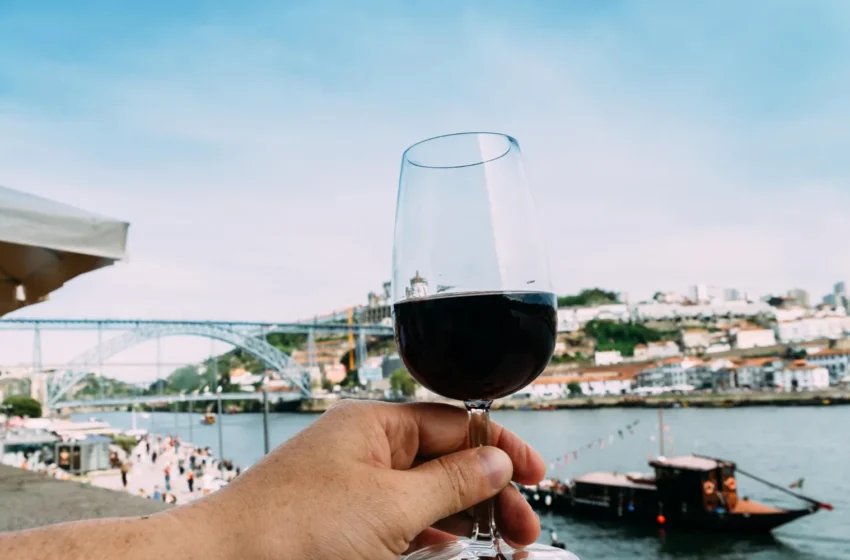
Most travellers arrive in Porto expecting the vineyards to be somewhere nearby. They are not. The cellars lined up along the waterfront at Vila Nova de Gaia are where the wine sleeps, but the vines that produced it grow between 100 and 140 kilometres upriver, on slopes so steep that the soil had to be built by hand. Booking a Porto vineyard tour means, in practice, deciding how you are going to travel east into the Douro Valley, how far up the river you want to go, and how much of a working wine estate you want to see once you get there. This guide answers those three questions, and the practical ones that follow: the drive, the railway, the harvest, the sub-regions and the etiquette of turning up at a Portuguese quinta.
What a Porto vineyard tour really means
There are two entirely different wine experiences on offer in and around the city, and confusing them is the single most common planning mistake.
The first is the lodge circuit in Vila Nova de Gaia, on the south bank of the Douro directly opposite Porto’s old town. These are ageing warehouses: cool, dim, stacked with casks, with fixed tour times and walk-in availability most days of the year. They are genuinely worth an afternoon, and they explain the maturation side of the story better than anywhere else. What they do not have is a single vine. If you want to understand the wine itself rather than the vineyard, our guide to Port wine and how it is made covers the styles, the fortification and the tasting in detail, so this article will not repeat that ground.
The second experience — and the one people usually mean when they search for a vineyard tour — is the Douro Valley itself: the terraced amphitheatres above Peso da Régua and Pinhão, the quintas with their whitewashed walls and painted estate names visible from the far bank, the river switching back on itself every few kilometres. This is the world’s oldest demarcated wine region, mapped out in 1756 under the Marquês de Pombal and physically marked with granite pillars, and since 2001 the Alto Douro Wine Region has been a UNESCO World Heritage cultural landscape covering some 24,600 hectares. It is a landscape you visit, not a museum you walk through.
A good Porto vineyard tour uses the city as a base and treats the valley as the main event. That is a logistical decision as much as a romantic one, and it starts with how you get there.
How to reach the Douro vineyards from Porto
The valley is close enough for a day trip and far enough that the journey shapes the day. Three routes matter, and each one shows you a different Douro.
By road, and the famous N222
Peso da Régua sits roughly 110 kilometres from Porto, about an hour and a half by car on the A4 motorway. Pinhão, deeper into the valley, is around 130 kilometres and closer to two hours. Most full-day excursions therefore run somewhere between nine and ten hours door to door, with roughly eighty to a hundred minutes of transfer in each direction.
The motorway is the fast way in. The reward comes when you leave it. The N222 between Régua and Pinhão is the stretch that appears on every list of great European driving roads, and it earns the reputation: twenty-seven kilometres of curves cut into the hillside with the river below and terraces rising above on both banks. Driving it yourself is a real pleasure, with one obvious catch — the person at the wheel cannot taste. That single fact decides the format for a lot of couples.
By train on the Linha do Douro
The Douro railway is one of the most scenic lines in Europe and, for independent travellers, the most underrated way to reach the vineyards. Trains run by CP leave from Porto São Bento, the tiled station in the centre of town, call at Campanhã a few minutes later, and then follow the river east. Régua is roughly one hour fifty-five minutes away; Pinhão is about two hours twenty; the line continues to Pocinho, some three and a half hours out.
From Tua onwards the valley narrows and the track runs almost at water level, which is where the scenery becomes genuinely spectacular. Travelling east, the river sits on the right-hand side for most of the journey. Pinhão’s small station, with its azulejo panels depicting the harvest, is within walking distance of several riverside quintas — which makes a train-based day realistic even without a car, provided you have booked your visits in advance.
By river, and the story of the rabelo boats
Before the railway and long before the motorway, the wine came down to Gaia by water. The barcos rabelos — flat-bottomed, shallow-draught wooden boats steered with a long sweep oar from a raised platform — carried the casks through rapids that no ordinary hull could survive. They are documented on the Douro as far back as the thirteenth century and were formally regulated in 1792. The dams and locks built from 1968 onwards tamed the river and finished them off as working craft; the ones moored photogenically in front of the Gaia lodges today are ambassadors, not cargo vessels.
Their descendants still matter to visitors, though. A short panoramic cruise between Régua and Pinhão is the only way to see the terraces from the angle they were designed to be seen from: below, looking up, with the whole vertical stack of walls and vines above you at once. Most well-built vineyard days include one, usually after lunch, and it is the section people remember.
The Douro sub-regions to know before you book a Porto vineyard tour
The Douro Demarcated Region covers around 250,000 hectares, of which only about 43,800 are actually under vine. It is not one valley but three distinct climates strung along the same river, sheltered from Atlantic weather by the Marão and Montemuro mountains. The rule of thumb is simple: the further east you drive from Porto, the hotter and drier it gets, and the more concentrated the wines become. Which sub-region you reach depends almost entirely on how long you are willing to travel.

Baixo Corgo: the closest and greenest
The Lower Corgo is the westernmost sub-region, the first you reach from Porto, and the wettest — it can take up to around 1,200 millimetres of rain a year. It is also the most densely planted: roughly 13,200 hectares of vines within 45,000 hectares of territory, about 29 per cent under vine, the highest proportion in the Douro. The landscape is softer and greener than the postcards suggest, the villages sit closer together, and Peso da Régua acts as the gateway town and the seat of the region’s wine institutions.
Its wines are historically the lighter, earlier-maturing ones, the base of Ports made for drinking young rather than cellaring for decades. For a visitor with a single day out of Porto, the Baixo Corgo is the pragmatic choice: less time in the car, more time in the vineyard, and a landscape that already delivers the terraced drama people come for.
Cima Corgo: the classic heart
Cross the Corgo river and you enter the Upper Corgo, the sub-region most people picture when they imagine the Douro. Pinhão sits at its centre. Roughly 20,400 hectares of vines spread across 95,000 hectares of hillside, and this is where the majority of the historic premium vineyards are concentrated — the estates whose names are painted in metre-high letters on the terraces facing the river.
The climate is warmer and drier than the Baixo Corgo, and the wines are correspondingly deeper and longer-lived, whether they end up as vintage Port or as the powerful red Portuguese grape varieties that go into Douro DOC table wines — Touriga Nacional, Touriga Franca, Tinta Roriz, Tinta Barroca and Tinto Cão among them. If you only get one day and want the definitive Douro image, this is where to spend it. It is also the natural destination for anyone arriving by train.
Douro Superior: the wild east
The Upper Douro is the largest sub-region by area — around 110,000 hectares — and the least planted, with only about 10,200 hectares of vines, roughly nine per cent of its surface. It runs east towards the Spanish border, and it is hot and severe: annual rainfall can drop to around 380 millimetres. The terrain is less rugged than further west, which is precisely why much of the modern, mechanisable planting has happened here.
It is the frontier Douro. Distances between estates are long, the light is harder, the horizons wider, and some of the most admired new-wave Portuguese reds come from these vineyards. It does not work as a day trip from Porto — you need to sleep in the valley — but for a second or third visit, or for anyone who has already done Pinhão, it is the most rewarding direction to travel.
Vinho Verde: the green counterpoint north of Porto
Not every vine near Porto is a Douro vine. Immediately north and inland from the city lies the Vinho Verde region, stretching from the River Minho on the Spanish border down the coast past Porto to the Vouga. It became a DOC in 1984 and is divided into nine sub-regions, including Amarante, Baião, Monção e Melgaço and Sousa.
Everything about it is the opposite of the Douro. The climate is cool, rainy and Atlantic; the soils are granite rather than schist; the vines are trained high and green; and the wines are pale, crisp, high in acidity and usually low in alcohol, typically around 9 to 11 per cent, often with a faint spritz. “Green” refers to their youth, not their colour. Alvarinho, Loureiro, Avesso and Arinto are the names to look for in whites, with Vinhão behind the deep, sharp reds locals drink from ceramic bowls.
Because it starts practically at Porto’s northern edge, Vinho Verde works as a half-day when the Douro would be a full one, and it makes an excellent contrast if you have several days. Our overview of Portugal’s wine regions puts both in the wider national context.
Comparing where to go on a Porto vineyard tour
The table below sets the three Douro sub-regions side by side with Vinho Verde, using the two factors that actually decide an itinerary: how far the vineyards are from Porto, and what you get when you arrive.
| Area | Distance from Porto | Wine style | Landscape | Best suited to |
|---|---|---|---|---|
| Baixo Corgo (Régua) | ~110 km, about 1 h 30 by road; ~1 h 55 by train | Lighter, earlier-maturing Ports; fresh Douro reds and whites | Greenest and most densely terraced; softest hills | A first day trip from Porto with maximum time in the vineyard |
| Cima Corgo (Pinhão) | ~130 km, about 2 h by road; ~2 h 20 by train | Concentrated, long-lived Ports and structured Douro DOC reds | The classic amphitheatre of stone terraces above the river | Travellers who want the definitive Douro image, by car or train |
| Douro Superior | Beyond Pinhão towards Pocinho; ~3 h 20 by train | Bold modern reds from a hot, dry climate | Wide, arid, frontier country with long views | A second visit or an overnight stay in the valley |
| Vinho Verde (Minho) | Starts just north of Porto; under an hour to the nearer estates | Crisp, low-alcohol whites; sharp rustic reds | Green, granite, Atlantic; pergola-trained vines | A half-day escape or a palate-cleansing contrast to the Douro |
Read it as a time budget. If you have one free day in Porto, the Baixo Corgo and Cima Corgo are both comfortably reachable and the choice is essentially between more vineyard time and more iconic scenery. If you have a morning, go north to the Minho instead of rushing east. If you have three days or more, the valley itself becomes your base and the Douro Superior opens up.
Inside a quinta: schist, socalcos and granite lagares
What makes the Douro extraordinary is that almost none of the growing surface is natural. The bedrock is schist, which fractures into near-vertical plates — a gift, because vine roots can drive down through the fissures to find water in a place that offers very little of it. But schist hillsides at forty degrees do not hold soil, so for centuries people built the vineyards themselves, stone by stone.
On a good estate visit you will be shown three generations of that engineering, and knowing the vocabulary transforms the walk. The socalcos are the oldest: narrow, irregular terraces held up by dry-stone schist walls, often carrying just one or two rows of vines, workable only by hand and hugely expensive to maintain. They are the reason the landscape earned its UNESCO listing and they are protected accordingly. The patamares, introduced from the mid-twentieth century, are wider terraces retained by earth banks rather than walls; they are cheaper to maintain and just wide enough for a small tractor, and modern versions are tilted slightly inwards to hold rainwater and slow erosion. Finally, vinha ao alto plants the rows straight up and down the slope, which allows mechanisation on gradients up to around thirty per cent. Look across any stretch of the valley and you can read all three, layered on the same hillside like tree rings.
Inside the winery, the other thing to look for is the lagar: a broad, shallow granite tank, usually waist-deep, where grapes are still trodden by foot. The Douro is the one corner of Europe where treading survives as a living commercial technique rather than a folkloric demonstration, because human feet break the skins without crushing the seeds. Ask whether the estate still uses its lagares and you will almost always get a long, enthusiastic answer.
Add the tasting room, the cooperage, the terrace lunch and the view, and a single quinta visit typically absorbs ninety minutes to two hours. That arithmetic is why two estates in a day is the sensible maximum, and why itineraries promising four start to look suspicious.
See the Douro terraces without doing the driving
Our five-day Porto and Douro Valley trip pairs the city’s historic cellars with a full private day among the quintas, guide and transfers included. You taste; nobody has to stay sober at the wheel.
See our private wine tours in Portugal →
The best time for a Porto vineyard tour, and what the vindima adds
The Douro has a long season and two clear peaks. April to June and September to early November are the strongest windows overall; May, June and November offer the best combination of good weather, open estates and manageable crowds. May typically brings highs around 24°C with cool evenings. July and August are a different proposition: the valley is a natural heat trap and 30 to 35°C is routine, with occasional spikes well above that, which makes midday walks among the terraces genuinely hard work.
Then there is the vindima. The harvest usually begins in late August or early September and runs into October, with the peak concentrated in the second half of September. Whites come off the vines first, then the reds destined for Port and Douro DOC wines. On these slopes everything is still picked by hand, because no machine can work a socalco, and the pickers move through the terraces in teams from first light.

Visiting during the vindima is the most atmospheric version of a Porto vineyard tour by a wide margin — the estates are alive, the lagares are running, there is usually music and an open-air feast at the end of the day, and some quintas let guests tread. It is also the busiest and most expensive fortnight of the year, with the least availability. Decide which of those two facts matters more to you, and book well ahead either way.
One quieter secret: in late February the almond trees flower across the eastern Douro, turning the bare terraces white and pink for a couple of weeks. Almost nobody plans a trip around it.
Douro Valley day trip from Porto, or two or three nights?
A day trip absolutely works. Leave the city between eight and nine, reach the first estate mid-morning, taste, take lunch on a terrace above the river, board a short cruise in the afternoon and be back in Porto for dinner. Ten hours, two quintas, one boat: that is the standard shape, and it delivers the landscape, the wines and the sense of scale.
What it does not deliver is the valley in the evening. The Douro’s best hour is the one just before sunset, when the light comes in low across the terraces and the day’s tour buses have gone. It also does not deliver distance — a day trip realistically reaches the Baixo Corgo and Cima Corgo, and stops there.
Two or three nights changes the trip’s character. You can pace the estates instead of racing them, take the train one way and be collected by car the other, eat somewhere that requires a table booked a week in advance, and push east into the Douro Superior. If you are combining the valley with time in the city, the pattern that works best is a few nights in Porto for the lodges, the food markets and the riverfront, plus a full day or an overnight in the vineyards. For a broader picture of how the Douro sits alongside the country’s other routes, our guide to wine tourism in Portugal maps out the alternatives.
Small group, private or self-drive: choosing your format
The three formats suit genuinely different travellers, and the honest answer is that none is best in the abstract.
Self-drive gives you the N222 and total freedom over timing. The costs are real, though: one person cannot taste, Douro roads are narrow and unlit after dark, and you will need to arrange every estate visit yourself, in advance, by email. It suits confident drivers with a flexible schedule and at least one non-drinker.
Small group tours solve the driving problem and add a guide who can read the landscape for you, which matters more here than in most wine regions — the terraces are a historical document. Numbers stay low enough that estates will still open their working areas, and the shared-vehicle format makes a full day out of Porto straightforward. Our small group tours are built around that logic.
Private tours are the option for travellers who want the itinerary shaped around their own tastes: specific estates, a longer lunch, extra time in the Cima Corgo, a Vinho Verde morning added on the way back. They also travel at your pace, which in a valley this photogenic is worth more than it sounds. You can see how we structure them on our private tours page, and browse the full range of wine tours in Europe if Portugal is one stop in a longer trip.
How to choose which quintas to visit
There are hundreds of estates in the Douro and no ranking that survives contact with personal taste, so use criteria rather than lists.
Start with what the estate actually does. Some quintas make only Port, some only Douro DOC still wines, most make both — and a visit that includes both sides of the production tells a far more complete story. Then look at whether the vineyards are part of the tour or only the cellar; on these slopes, walking the terraces is the point, and an estate that keeps you indoors has wasted its best asset. Ask whether tastings are seated and guided or self-service at a counter, whether lunch is available on site, and whether the estate still ferments in lagares.
Size matters differently here than elsewhere. The large historic houses run polished, reliable visits in several languages with fixed departure times; small family quintas may put you with the winemaker but need more notice and more flexibility. A well-designed day often pairs one of each.
Finally, check the view. It sounds frivolous and it is not: the estates on the outer bends of the river, with terraces climbing behind them and the water below, give you the Douro in one frame. Balancing those criteria — one large house, one family estate, both with vineyard access and a river outlook — is essentially how our own Douro itineraries are assembled, and it is a template you can copy whether or not you travel with us.
Our Porto vineyard tours in the Douro Valley
Viavinum builds trips around working estates rather than visitor centres, with small numbers, real winemaker contact and meals treated as part of the wine rather than an interruption to it. Everything below is a scheduled departure with a published itinerary; dates and formats are exactly as they appear on each tour page. The first is the dedicated Porto and Douro trip; the other two reach the same valley as part of a wider Iberian route, or cover the other half of Portugal’s wine map.
| Tour | Dates | What it covers | Format |
|---|---|---|---|
| Porto and Douro Valley: Between Flavors and Tradition Our dedicated Porto vineyard tour |
6-10 November | 5 days / 4 nights based in Porto; 4 winery visits; a full private guided day in the Douro Valley with two estates, a traditional paired lunch and a panoramic Douro River cruise; WOW entry and a guided food tour of the historic centre and Bolhão market | Private tour, min 2 / max 8 people, private transfers, 4* hotel |
| Wonders of Northern Spain and Portugal | 11-25 October · 1-15 November | 15 days / 14 nights from Bilbao to Lisbon, taking in the Basque Country, Cantabria, Asturias, the Minho, the Douro Valley, Porto, Sintra, Cascais and Lisbon; 4 winery visits. Reaches both the Douro and the Vinho Verde country described above | Small shared group tour in English, private transportation, 4* and 5* hotels |
| Lisbon and Alentejo: A Luxury Food and Wine Tour | 28 September – 4 October · 5-11 October · 19-25 October · 9-15 November | 7 days / 6 nights based on Lisbon, with 4 winery visits in the south of the country — the natural companion trip if you want Portugal’s other great wine landscape | Small shared group tour in English, private transportation, 5* hotels |
Choosing between them is mostly a question of scope. If the Douro is the reason you are travelling, the five-day Porto and Douro Valley departure is the one to look at: it gives you the vineyards, the Gaia cellars and the city’s food culture in one compact trip, at a group size small enough to go where coaches cannot, and the November timing puts you in the valley after the harvest crowds have gone. If Portugal is one chapter in a longer European journey, the fifteen-day Wonders of Northern Spain and Portugal itinerary reaches the Douro and the Minho as part of a much wider arc, with two departures to choose from. And if you are already committed to Lisbon, the Alentejo tour covers the other half of the Portuguese story entirely, across four dates. Whichever you pick, the vineyard days are the fixed point; everything else is arranged around them.
How long does it take to get to the vineyards from Porto?
Count on about an hour and a half by road to Peso da Régua, at the western end of the Douro Valley, and roughly two hours to Pinhão, deeper in. By train the same journeys take about one hour fifty-five and two hours twenty respectively from Porto São Bento. Because a proper estate visit runs ninety minutes to two hours and you will want lunch and, ideally, a short river cruise, a realistic full-day vineyard trip from Porto occupies nine to ten hours from pick-up to drop-off. Anything much shorter has cut either the travel or the tasting, and neither improves the day.
Can you visit the Douro Valley from Porto by train or by boat?
Both, and they combine well. The Linha do Douro railway runs from Porto São Bento via Campanhã along the river to Régua, Pinhão and Pocinho, with only a handful of services a day, so check timetables before committing. It is inexpensive, scenic and drops you within walking distance of several riverside quintas at Pinhão. Boats are a different proposition: full-day cruises from Porto exist but spend most of the day on the water and very little in a vineyard. The better arrangement is to travel by road or rail and take a short panoramic cruise between Régua and Pinhão as part of the day, which is exactly how our Douro excursions are built. A popular independent version is train out, cruise in the middle, train back.
When is the best time of year to go, and can you see the harvest?
April to June and September to early November are the best months, balancing weather, open estates and crowd levels. May, June and November are the value sweet spots. July and August are hot enough — routinely 30 to 35°C in the valley — to make daytime vineyard walks uncomfortable. The vindima runs from late August or early September into October, peaking in the second half of September; it is the most vivid time to visit, with hand-picking on the terraces, granite lagares in use and harvest feasts in the evenings, but also the busiest and priciest. If the harvest is your reason for coming, book several months ahead.
Do you need to book quinta visits in advance?
Yes, almost always. Douro quintas are working farms with small hospitality teams and limited tasting-room capacity, and most require a reservation by email or online form. Some estates specify a minimum notice period of a week or more, and several of the most sought-after accept pre-arranged visits only, with no walk-in tastings at all. A safe rule is one to two weeks ahead in the shoulder seasons and considerably more for September and October. The exception is the Port lodges across the river in Vila Nova de Gaia, which open daily with fixed tour times and take walk-ins — which is precisely why they are not a substitute for a vineyard visit. On a guided tour this is handled for you, and it is one of the format’s genuine practical advantages.
What is the difference between Port wine and Douro wine?
They come from the same vineyards and often from the same grapes; the difference is made in the cellar. Port is fortified: a neutral grape spirit is added part-way through fermentation, which stops the yeast, leaves natural sweetness in the wine and lifts it to roughly 19 to 22 per cent alcohol. Douro DOC wines are unfortified still reds and whites that ferment to dryness at normal table-wine strength. The region now produces roughly as much still wine as fortified, and some of Portugal’s most admired reds are Douro DOC. On a vineyard tour you will usually taste both from the same estate, which is the clearest way to understand what fortification actually does.
Plan your Porto vineyard tour with Viavinum
The Douro rewards travellers who arrive knowing what they are looking at. Once you can tell a socalco from a patamar, place an estate in the Baixo or the Cima Corgo, and taste a fortified wine against a still one from the same slope, a day among the terraces stops being a scenic excursion and becomes something you will still be thinking about months later. Getting there is the easy part; the choices worth making are which stretch of river to spend your time on, and who opens the cellar door for you.
