

A Realistic One Day in Bologna Itinerary by a Local

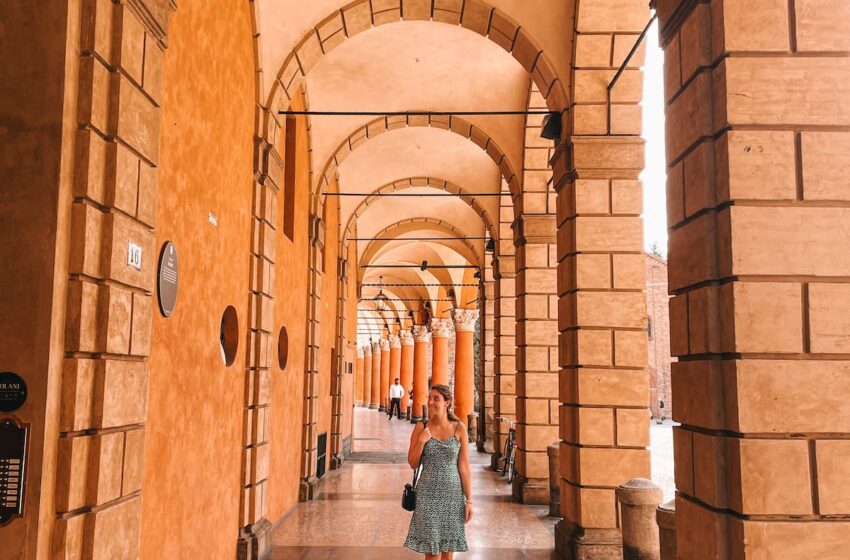
Bologna is my hometown, and I’d love for you to see more than its train station! With one day in Bologna, you can explore its main sights, walk under the porticoes, discover a few local secrets, and make time for some very good food.
I was born and raised here, so this itinerary combines the places you’ll want to see on a first visit with smaller details I love pointing out. Think Piazza Maggiore and the Two Towers, but also a hidden canal, fossilized shells, and the food shops along Via Pescherie Vecchie.
This route assumes you have a full day, from around 9 AM until late afternoon or aperitivo. The at-a-glance table follows the Tuesday-to-Saturday route. The next section explains how to adjust it for Mondays and Sundays.
One Day in Bologna at a Glance
The times below are a guide for a Tuesday-to-Saturday visit. You’ll find adjustments for Mondays and Sundays in the next section.
Adding the optional Clock Tower, a long lunch, or a tour will shift the later stops, so leave yourself some breathing room.
Before You Start
- Reserve the Archiginnasio before you go. The official €10 audioguide visit fits this schedule. If you prefer a live guide, this one-hour Archiginnasio guided tour also includes Anatomical Theatre entry. Check the available start time and adjust lunch if needed. Arrive 10 minutes before either visit.
- On Mondays: move Salaborsa to after lunch, around 2:30 PM, because it opens in the afternoon. Santo Stefano is closed to tourist visits, and Mò! Mortadella Lab is closed too. Enjoy Santo Stefano’s square from outside and use one of the other lunch options.
- On Sundays: the Archiginnasio and Salaborsa are closed. Use the optional Clock Tower as your paid interior visit, leave more time for the streets and food shops, and visit Santo Stefano after 3 PM. If you want Osteria del Sole, stop there at lunchtime because it closes at 4 PM on Sundays.
- Torre degli Asinelli is currently closed to visitors. This itinerary includes the Two Towers as an outdoor stop, with the Clock Tower as the optional viewpoint. Church access can also change during services, and holiday schedules may differ.
- Coming between trains? Allow roughly 20–25 minutes to walk from Bologna Centrale to Piazza Maggiore, without stops. Most central sights are about 5–10 minutes apart. The full day involves several kilometers of walking, depending on your detours; comfortable shoes will earn their place in your suitcase.
You can open the route in Google Maps in two parts: the morning walk and the lunch and afternoon walk.
The afternoon route includes the Two Towers and the optional university and former Jewish ghetto walk, ending at Dal Brillo on Via Marsala. If you choose shopping instead, head from Santo Stefano toward Via Farini and Galleria Cavour.
For aperitivo at Lab16, stop on Via Zamboni; for Osteria del Sole, return to the Quadrilatero. Follow any signed diversions around the towers.
Prefer to Explore With a Guide?
If you’d rather have a local guide introduce you to Bologna, my pick is the Bologna City Center Walking Tour. The standard tour lasts about two hours and covers highlights such as Piazza Maggiore, the Neptune Fountain, the Quadrilatero, and the Two Towers.
Take it in the morning as an alternative to the self-guided walk below. Afterward, you can have lunch and visit the interiors that interest you, rather than repeat every stop.
There are also options with food vouchers or an afternoon Archiginnasio visit. Check which version you’re booking before buying separate tickets.
You’ll find more options in my guide to the best Bologna walking tours.
Check availability
One Day in Bologna Itinerary
9 AM: Stroll Down Via Indipendenza

If you’re coming from Bologna Centrale, you’re within walking distance of the historic center. Head toward Via Indipendenza and keep walking south: it leads you to the Neptune Fountain and Piazza Maggiore.
This is one of Bologna’s main shopping streets, lined with reddish buildings and porticoes. Stop for a coffee and a pastry along the way; we have a full day ahead, and sightseeing on an empty stomach is a terrible idea.
The southern stretch of Via Indipendenza is pedestrianized, but the whole station-to-center route isn’t traffic-free. Watch the crossings, then enjoy those covered sidewalks. If it rains, the porticoes will do much of the work for you!
9:30 AM: Peek Through the Canal Window on Via Piella

Take a short detour to the little window on Via Piella. Open it, and you’ll find a canal squeezed between the buildings, right in the center of the city. Not quite what you expected from Bologna, is it?
Bologna once had a much more visible network of canals. They helped power mills and the silk industry, but many were later covered over. This corner is often called “Little Venice,” and it’s a fun reminder of the water hidden beneath the streets.
Allow about 10–15 minutes. The water level varies, and the canal can be drained for maintenance, so don’t be surprised if it looks different from my photo. You can also glimpse the canals from nearby Via Oberdan and Via Malcontenti.
If these little discoveries are your kind of sightseeing, you’ll enjoy my 7 secrets of Bologna.
10 AM: Neptune, Piazza Maggiore & San Petronio
Start at the Fountain of Neptune, one of the city’s favorite meeting spots. “See you at Neptune” saves us an awful lot of explaining.
The fountain was created between 1563 and 1566. Although a sea god might seem an odd choice for landlocked Bologna, the monument symbolized papal power. Nearby, look for the old stone measurements set into the wall: these helped regulate the goods sold in the square’s market.
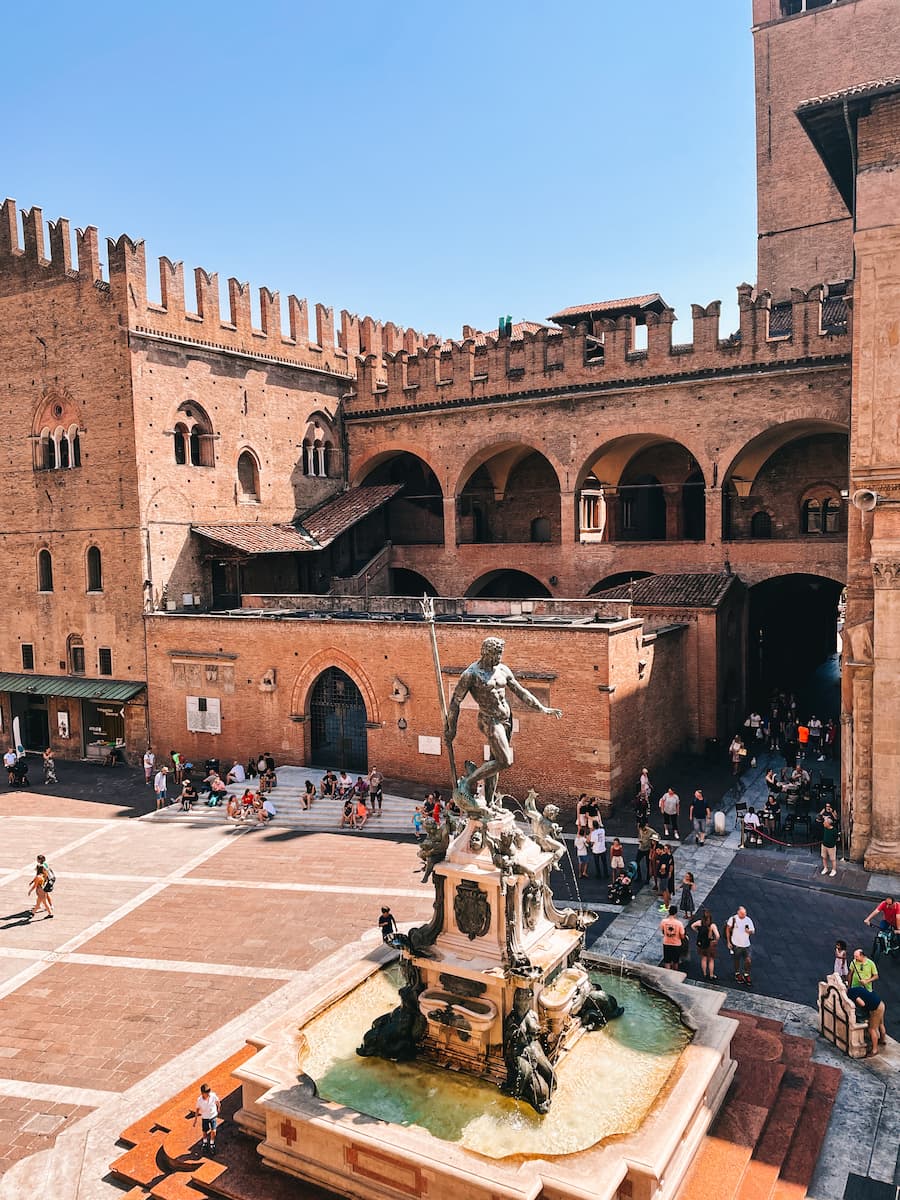
There’s another fountain on the Salaborsa side, the Fontana Vecchia, which was built to supply water to the public. A small detail, but a nice reminder that these grand squares also had very practical jobs.
Want another secret? This one is a little R-rated. From a particular angle near Salaborsa, Neptune’s thumb looks like… well… his erect penis. People say Giambologna did it on purpose as a joke, but that part is a legend. The giggles from first-time visitors are very real.
Facing Salaborsa across the fountain is Palazzo Re Enzo. It was built in 1244–1246 for municipal use, then became the place where Enzo of Sardinia, son of Emperor Frederick II, was held captive from 1249 until his death in 1272.
You don’t need to book a palace visit for this route. Instead, walk beneath the neighboring Palazzo del Podestà to the whispering vault. Choose a corner and have a friend stand diagonally opposite. Turn toward the walls as if you’ve both been sent into time-out, then whisper: the sound carries across the vault.
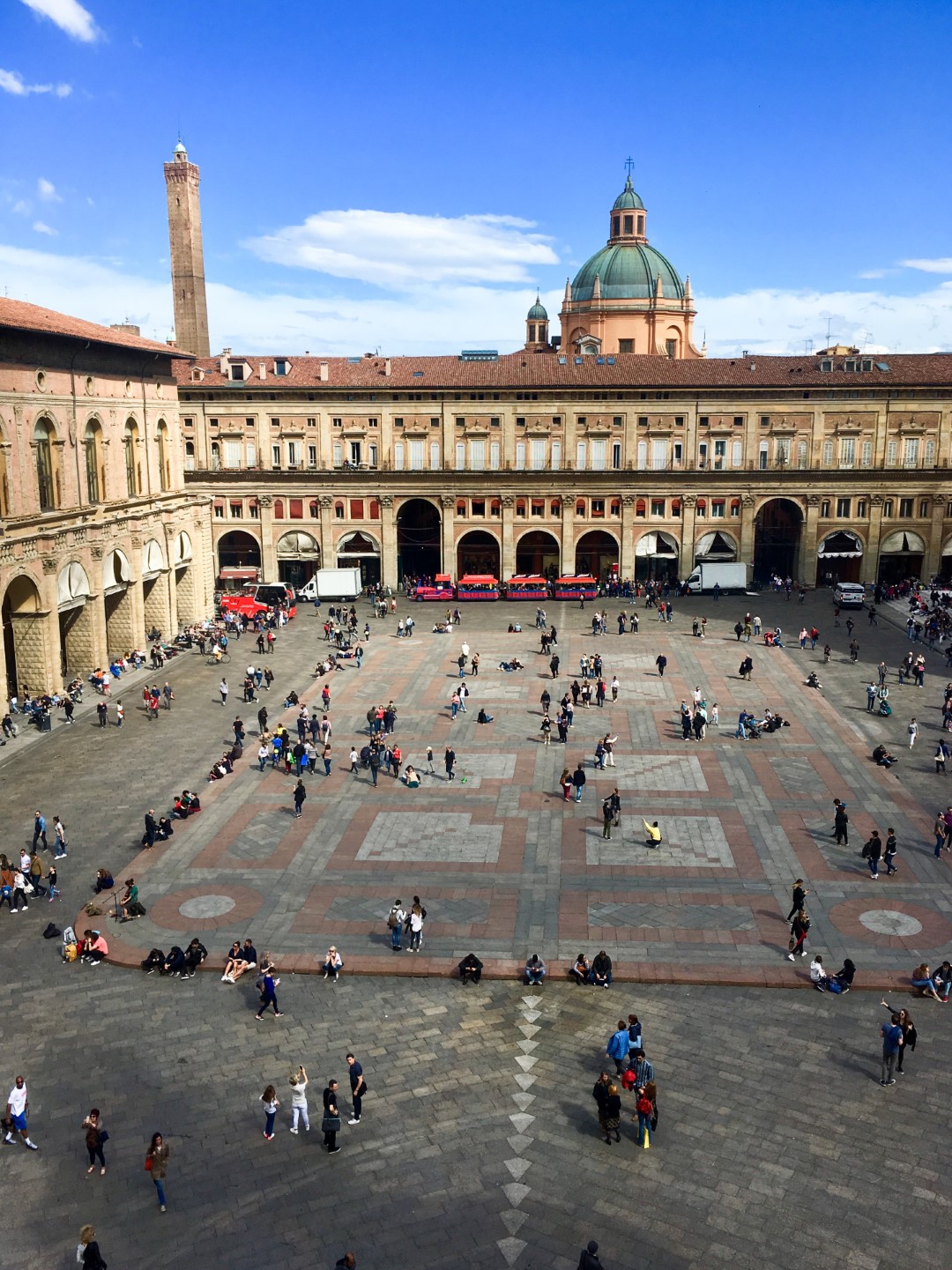
Piazza Maggiore is Bologna’s main square, and you’ll end up here sooner or later, itinerary or no itinerary. Look around: whichever way you turn, there’s another beautiful old building. If you sit at one of the cafés on the square, check the menu before ordering.
With that enormous façade overlooking Piazza Maggiore, you’d naturally assume San Petronio is Bologna’s cathedral. But Bologna likes to keep you guessing: the cathedral is actually San Pietro, which you’ll find on Via Indipendenza.

Construction of San Petronio began in 1390. In 1514, an ambitious new plan would have made it larger than St. Peter’s in Rome. According to local legend, Pope Pius IV helped put an end to that idea by having the Archiginnasio built beside it.
The basilica never reached that proposed size, and its façade remains unfinished. But we still love it, half-dressed façade and all.
Inside, look for Cassini’s enormous meridian line. If you want to see Giovanni da Modena’s dramatic frescoes of Paradise and Hell inside the Bolognini Chapel, you’ll need the separate paid chapel ticket.
Cover your shoulders and knees; suitcases and luggage are not allowed inside the basilica.
11 AM: Visit Salaborsa & Its Roman Ruins

Salaborsa is a gorgeous public library, with balconies, a vaulted ceiling, and a glass floor that lets you look down into Bologna’s past. The site has had many lives, including a stock exchange and a basketball court.

Underneath are archaeological remains from different periods, including a Roman civil basilica. To see them up close, follow the signs for scavi archeologici and take the stairs down to the excavations.
Entry is free, with a donation welcomed. It’s a short visit, but seeing ancient Bologna beneath a busy modern library is part of the charm. The excavations have stairs and are not accessible to wheelchair users.
If you need a coffee break, Bar Altroverso is inside the library. Sit down, sip your cappuccino, and admire the architecture.
Optional: Climb the Clock Tower for a View
Book the Clock Tower if you want a rooftop view
The standard ticket is €10 and the tower visit lasts about 40 minutes. Arrive five minutes early.
If you want a view over Bologna’s rooftops, the Clock Tower at Palazzo d’Accursio is the option to add while you’re already in Piazza Maggiore. The visit takes you through the palace’s courtyards and staircases, past the grand Sala Farnese, and up to the mechanism that keeps the clock ticking.
The highlight is the two panoramic terraces, overlooking Piazza Maggiore and the city’s red rooftops. The smartphone audioguide explains what you’re seeing along the way. Allow 45–60 minutes, then move the Archiginnasio and lunch later.
There is no elevator, and the upper stairs are narrow. Children under eight cannot access the upper terrace. Large bags aren’t allowed; wear closed shoes or sandals with back straps, and bring a charged phone and earphones for the audioguide.
The ticket also includes the Municipal Art Collections, but their hours differ and you can visit them within seven days. You don’t need to squeeze those into this one-day route too.
Around 11:45 AM: Visit the Archiginnasio
Reserve the Anatomical Theatre in advance
Choose a suitable late-morning audioguide slot. If you add the Clock Tower, book this visit later too.
Bologna is home to the oldest university in the Western world, so it makes sense to visit a piece of its history today. Follow the portico along the east side of San Petronio toward the Archiginnasio, on Piazza Galvani.
As you walk, look down for the spirals of fossilized shells in the red limestone. Then look up at the remains of what would have been San Petronio’s enormous east transept. There’s quite a lot to notice on this very short walk!

The Archiginnasio was once the university’s main building. Its courtyard and halls are covered in coats of arms, but the highlight is the 17th-century Anatomical Theatre. Wooden carvings surround a white dissection table at the center. Beautiful, and just a little unsettling.
Prefer a guide for the Archiginnasio?
This one-hour Archiginnasio guided tour covers the historic building and the Anatomical Theatre, with a guide to explain Bologna’s university history.
Book this instead of the independent audioguide visit. Check the departure time before booking and move lunch or the nearby afternoon stops if needed.
Check guided tour times
Bring a charged smartphone and earphones for the audioguide; large bags and backpacks are not allowed. The Stabat Mater Hall is included when it is not in use for events, while the research library is not part of an ordinary tourist visit.
If you need step-free access, contact the venue in advance: the accessible entrance is on Via Foscherari.
12:45 PM: Browse the Quadrilatero & Have Lunch
Prefer a food tour instead?
Want food to be the main event? My pick is the Bologna Food Tour from a Local Perspective, a small-group experience with breakfast, a pasta workshop visit, local tastings, a handmade pasta lunch, wine, and gelato.
I took a very similar food tour in Bologna and loved it. That exact tour is no longer bookable, but this is the closest itinerary I’ve found.
Allow about 4.5 hours. Choose the morning tour instead of the independent morning sightseeing and lunch in this itinerary, then spend the afternoon visiting the sights you still want to see.
Check the departure offered on your date before reserving other visits. My Bologna food tours guide has the full comparison.
Check availability

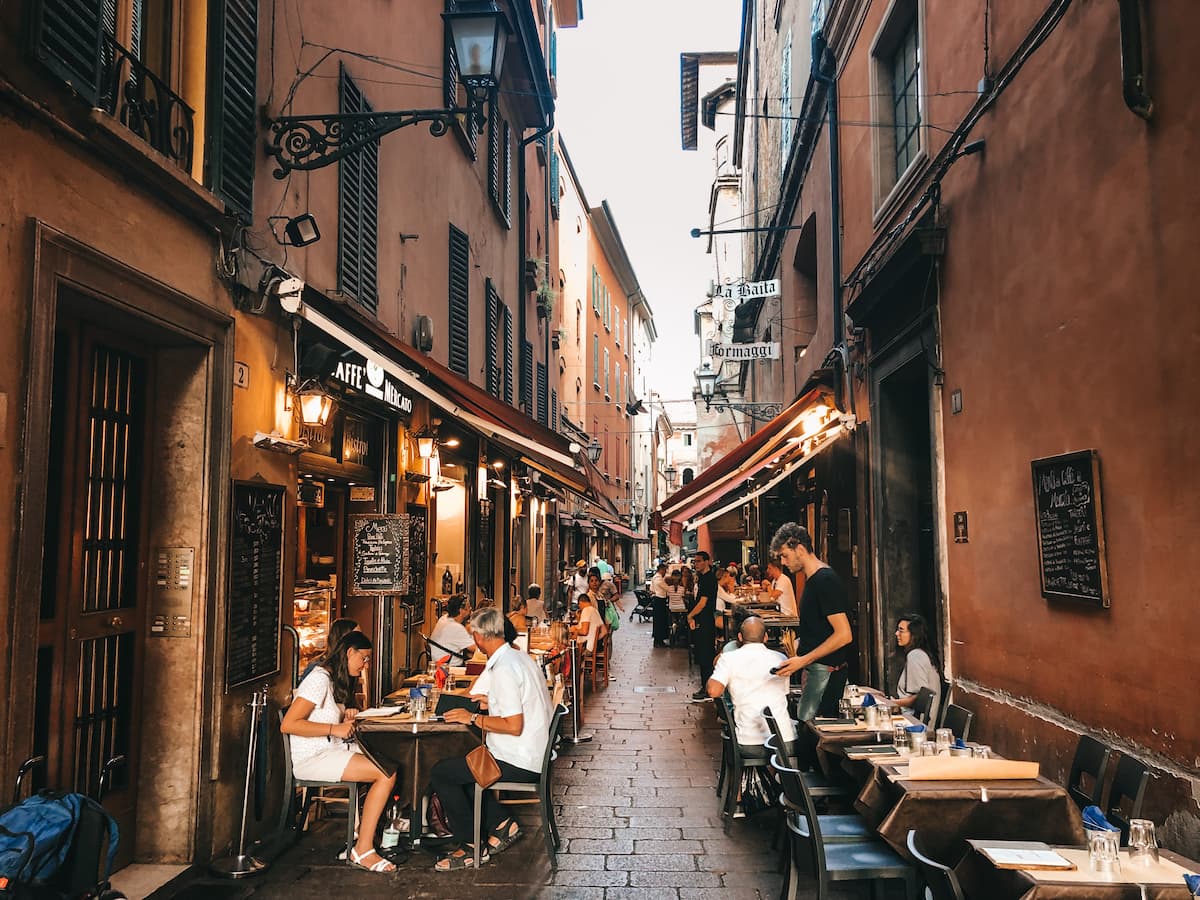
This is one of my favorite places in Bologna, and I can’t help bringing every first-time visitor here. When you walk down Via Pescherie Vecchie, you’ll feel like you’ve stepped into one of those wonderfully cliché Italian movie scenes.
The name means “old fish market street.” You’ll still find shops selling fish, fruit, vegetables, cured meats, and cheese around here. Even if food isn’t your main reason for visiting Bologna, this is a stop you shouldn’t miss. It’s also where you can buy some excellent souvenirs for your foodie friends. Assuming you don’t eat them first.
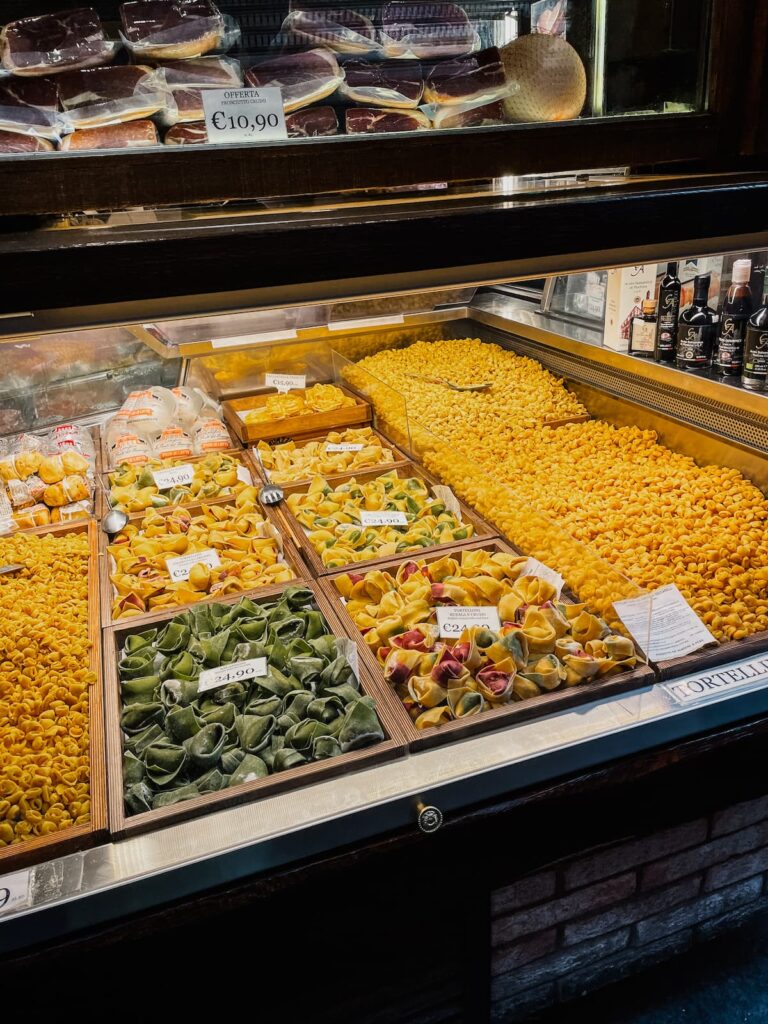
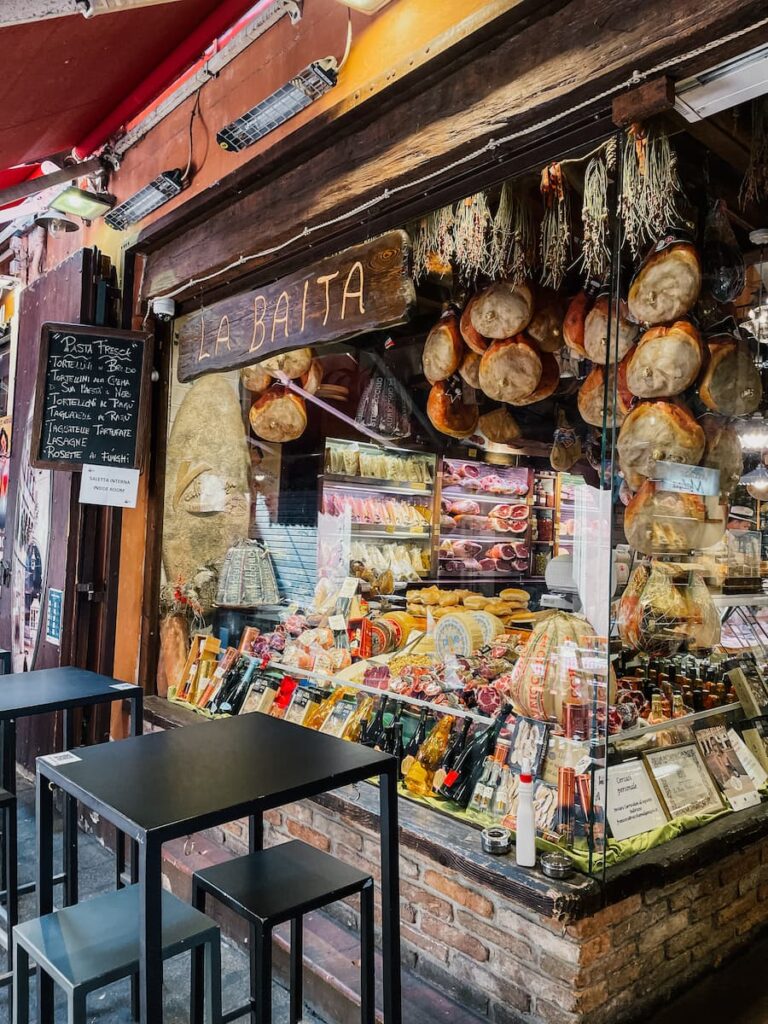
Take some time to browse the Quadrilatero, then choose your lunch:
➤ For a little of everything: Mercato di Mezzo. This indoor food market on Via Clavature is a convenient option if everyone wants something different. Look around before ordering, then settle in for lunch.

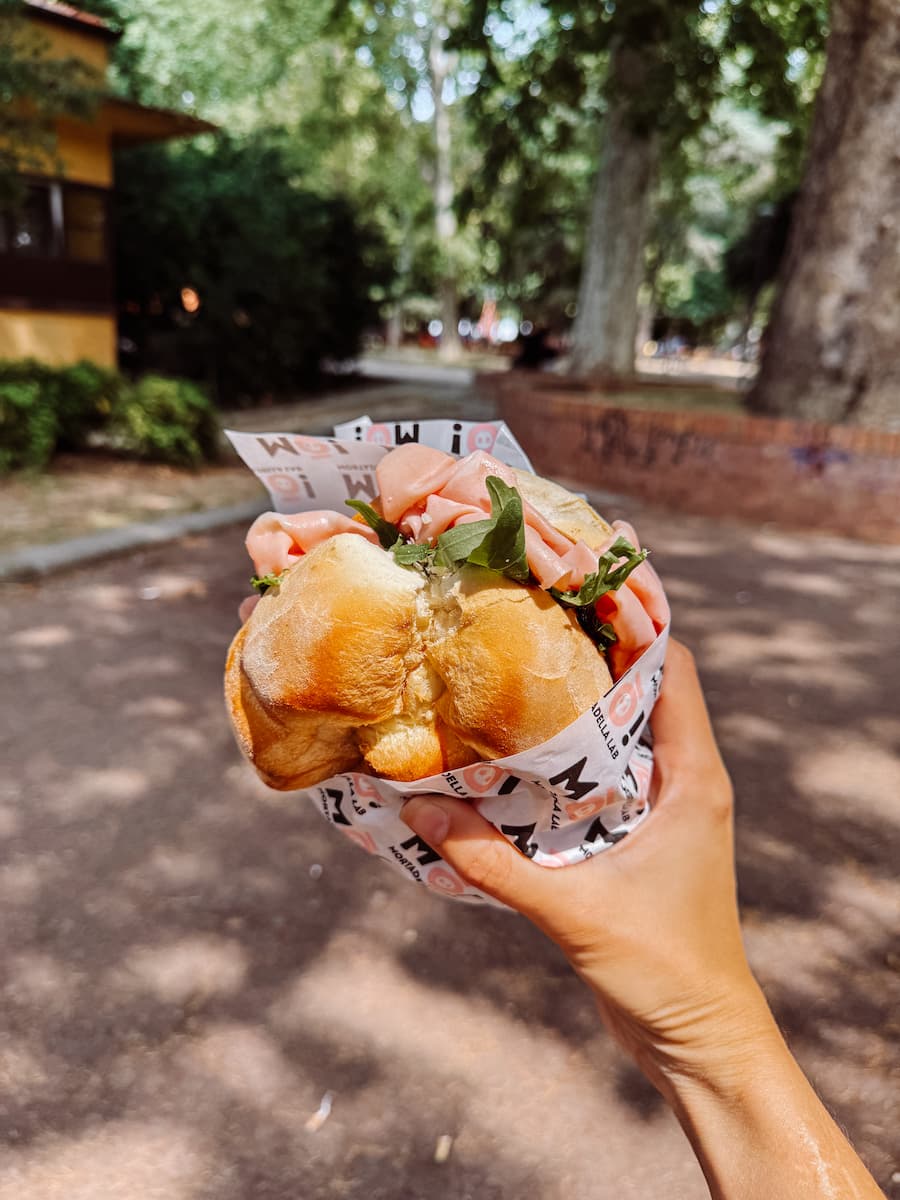
➤ For a mortadella sandwich: Mò! Mortadella Lab. Their rosetta sandwiches come stuffed with mortadella and all sorts of combinations. The Via San Vitale branch is near the Two Towers, so it fits nicely into this route. It’s a takeaway option, and it’s closed on Mondays.
➤ For a seated pasta lunch: Sfoglia Rina. On nearby Via Castiglione, this pasta shop and restaurant serves Bolognese classics such as tortellini in broth and tagliatelle al ragù, alongside a changing seasonal menu. They don’t take reservations, so allow some extra time if there’s a queue.
Choose one of these options and give yourself a proper lunch break. Bologna is hardly the place to rush through a sad sandwich between monuments! If you choose Mò!, you’ll already be beside the Two Towers afterward, so continue from there.
Want to know what you’re ordering? My Bologna food guide explains the local specialties, and my Bologna restaurants guide has more places to eat. The morning food tour at the start of this section replaces independent morning sightseeing and lunch.
Before you leave the area, look for the jazz stars along Via degli Orefici and Via Caprarie. Bologna’s jazz scene took off after World War II, and the pavement celebrates musicians linked to the city. Of course, Bologna’s own Lucio Dalla gets a star too.
2:15 PM: Admire the Two Towers
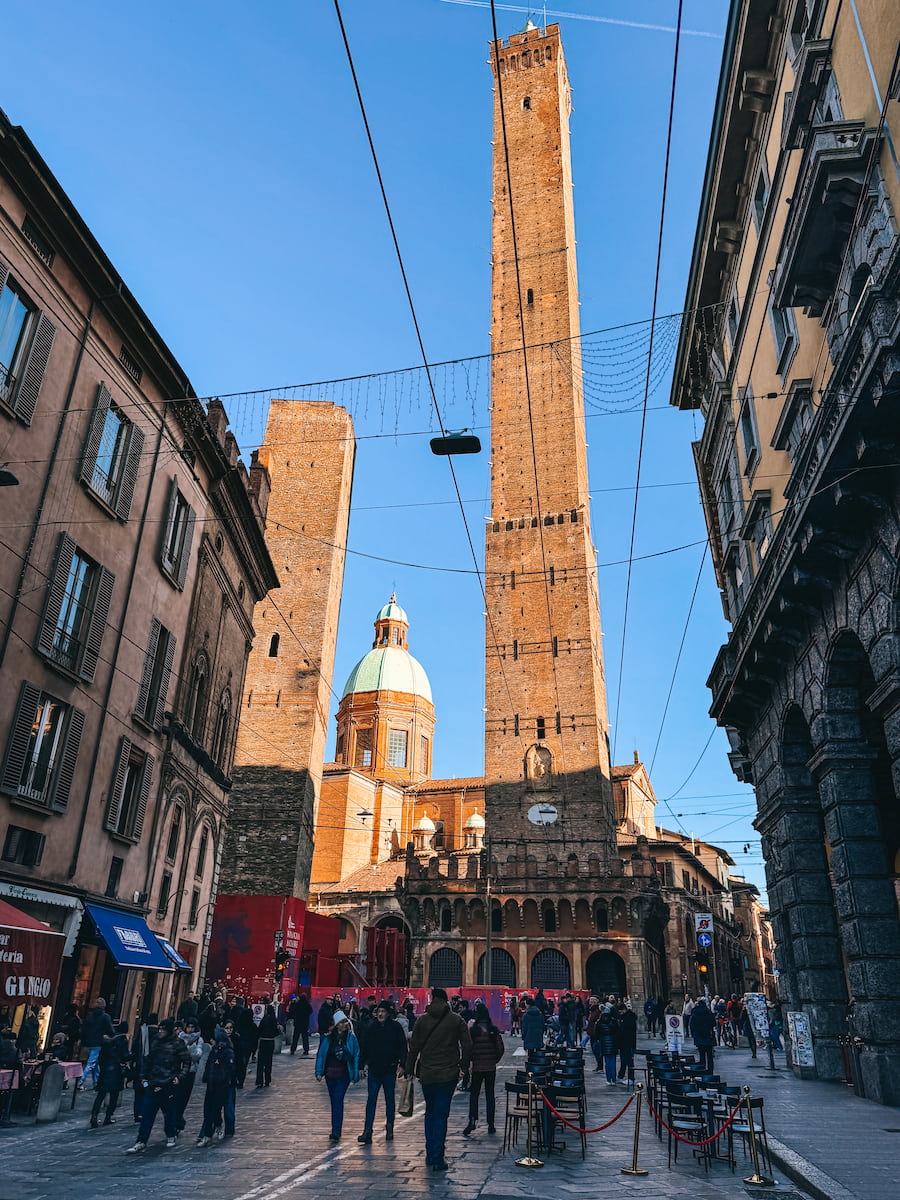
These medieval skyscrapers are among Bologna’s most recognizable symbols. Noble families used towers to show their wealth and power, as well as for defense. Subtlety clearly wasn’t the priority.
Can you imagine Bologna with more than 90 towers rising above its streets? Today, only 22 survive. Some are tucked into other buildings and are much less obvious than Asinelli and Garisenda, the famous Due Torri.
You can still admire the Two Towers from the surrounding streets, but Torre degli Asinelli is currently closed to visitors because of work around the towers. Garisenda cannot be climbed either. Follow the signs and barriers around the site.
If a view over Bologna’s rooftops is on your wish list, choose the optional Clock Tower visit earlier in this itinerary. It overlooks Piazza Maggiore, so you can fit it in while you’re already exploring the square.
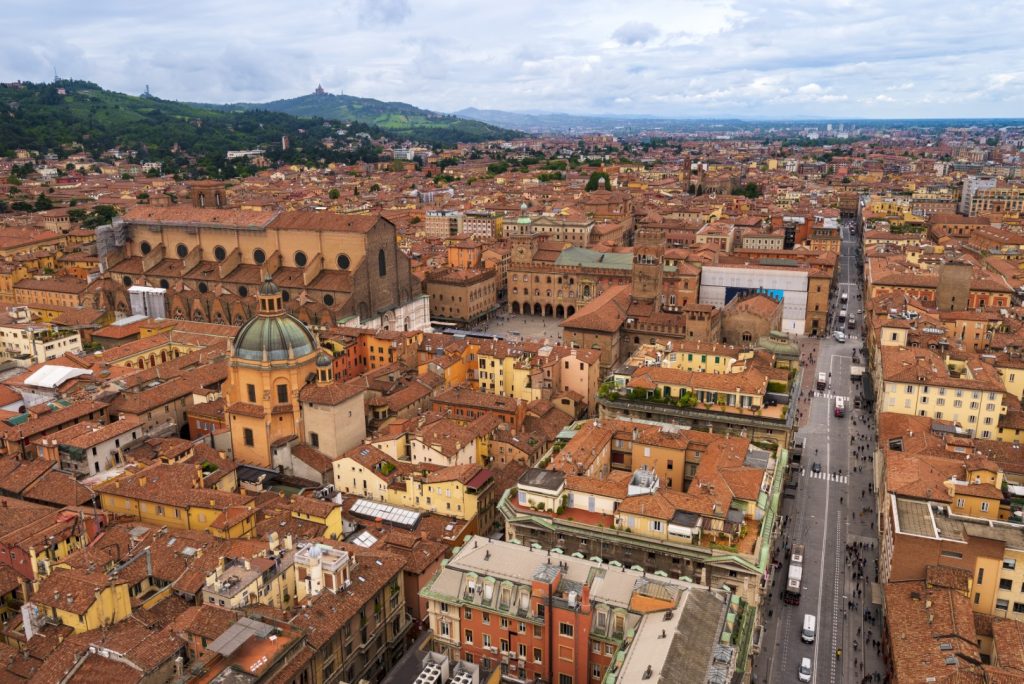
Bologna’s red rooftops are quite a sight, aren’t they? The photo above shows the view before the closure. For today’s outdoor stop, allow about 15–25 minutes.
2:45 PM: Explore Santo Stefano & Stop for Gelato
From the Two Towers, take a leisurely stroll to Piazza Santo Stefano. This is one of Bologna’s loveliest squares, and a very good place to slow down after lunch.
Along the way, stop at Cremeria la Vecchia Stalla on Via Santo Stefano 14/A. They make some of the best gelato in Bologna. And who doesn’t like gelato?!
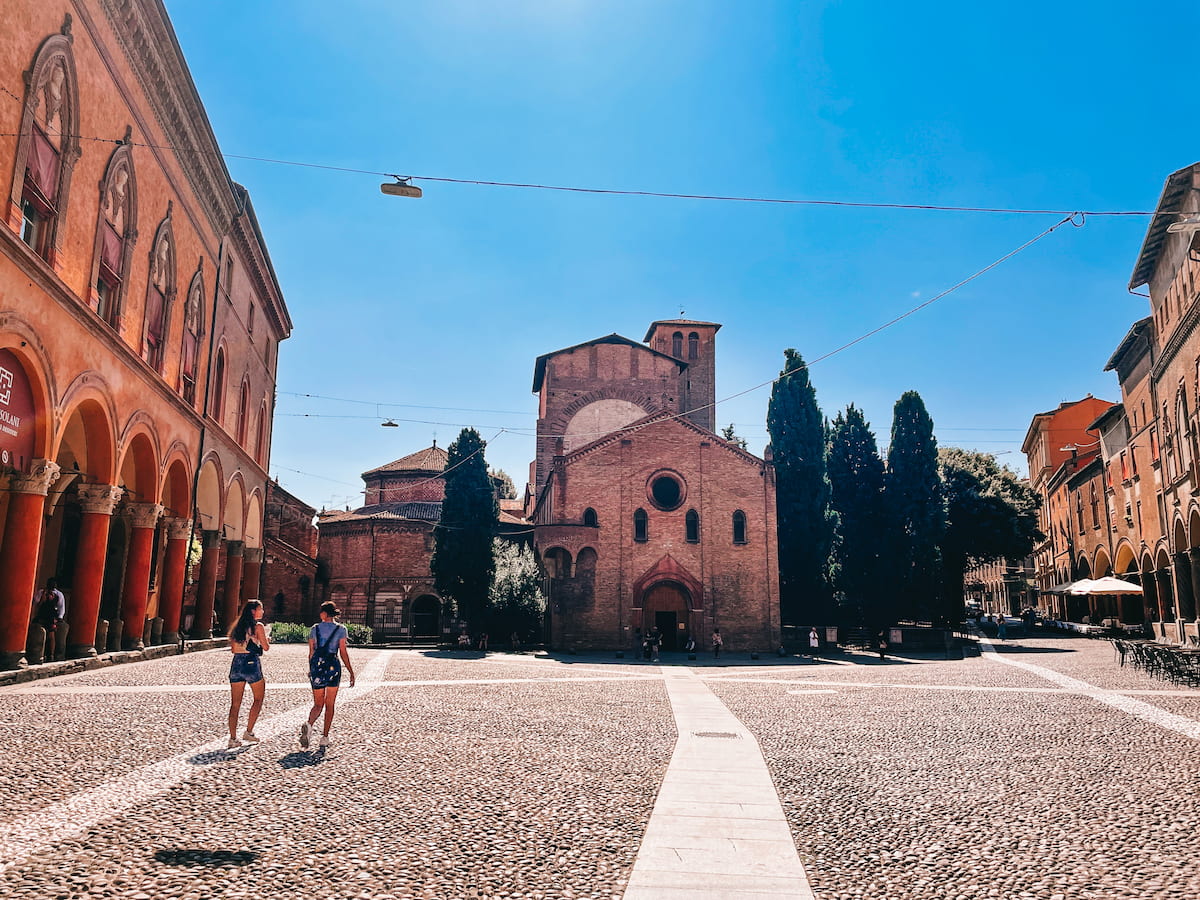
The star of the square is the Santo Stefano complex, also known as le Sette Chiese, or “the Seven Churches.” According to tradition, San Petronio established the early Christian sanctuary here in the fifth century; the site may previously have held a temple dedicated to Isis.
The complex grew over time, bringing together churches, courtyards, and a cloister. I highly recommend walking through the different spaces: you get a sense of how religious architecture evolved, without needing a long history lesson to enjoy it.
On Sundays, have your gelato or enjoy the square first, then enter after 3 PM. On Mondays, admire the exterior and give yourself a longer afternoon break instead.
Around 4 PM: Choose a Walk or Some Shopping, or a Cooking Class
You have a little room here to follow your interests. Allow 30–60 minutes for a walk or some shopping, or stay around Santo Stefano for a longer break. A cooking class is a longer alternative that replaces the afternoon sightseeing and aperitivo.
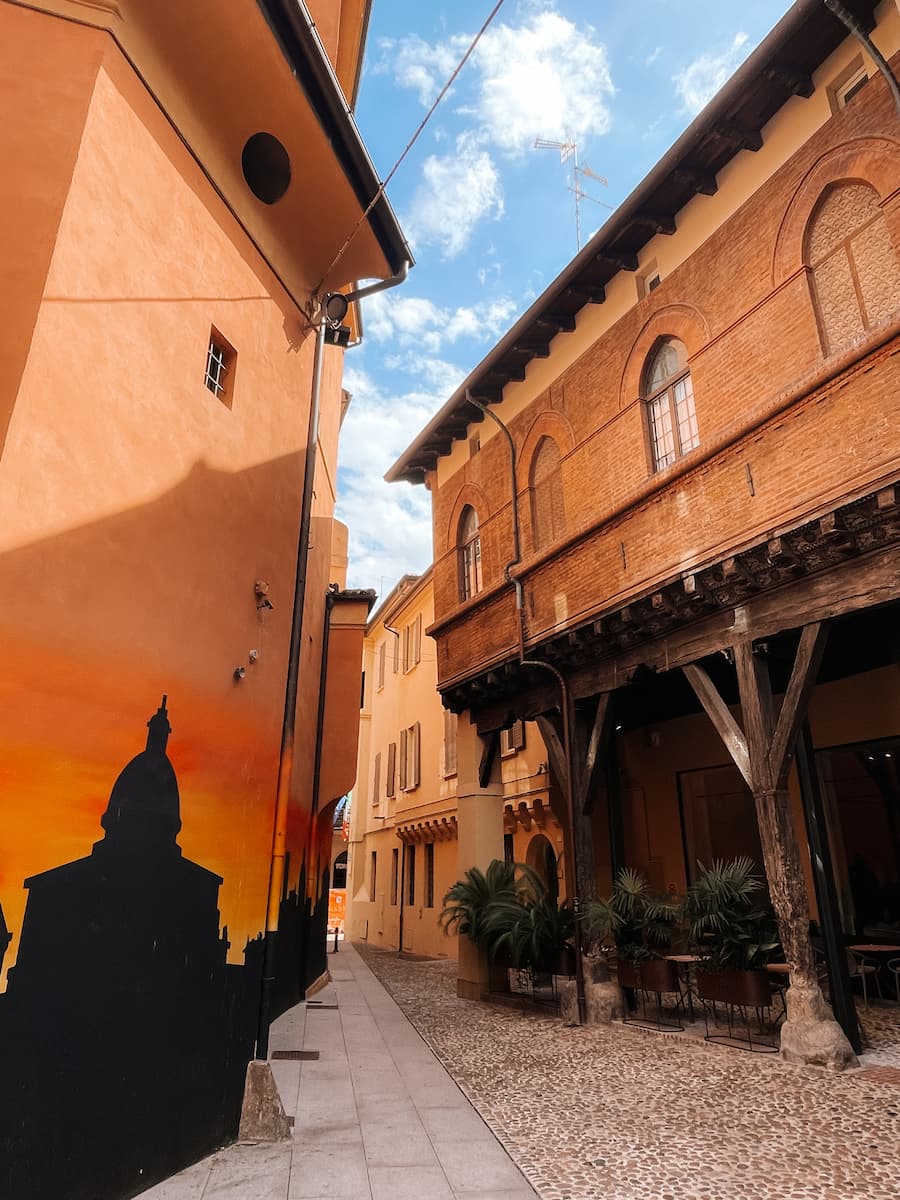
➤ Explore the university area and former Jewish ghetto. Head back toward the Two Towers and follow Via Zamboni, passing Piazza Rossini on your way to Piazza Verdi. This is the heart of Bologna’s university area, with university buildings, porticoes, student cafés, and the Teatro Comunale overlooking the square.
On your way back along Via Zamboni, turn into Via del Carro to explore the former Jewish ghetto. Wander through Via Valdonica and Via dell’Inferno, where the narrow lanes offer a different feel from the larger squares you’ve visited earlier. Continue toward Via Oberdan when you’re ready to leave.
➤ Go shopping or window-shopping. From Santo Stefano, head toward Via Farini and Piazza Cavour, then step inside Galleria Cavour, the covered shopping arcade with luxury fashion boutiques and jewelry stores. This is a good option if you enjoy designer shops or simply want a relaxed stroll around this elegant part of the center.
➤ Take a cooking class instead. Choose a Bologna cooking class instead of the afternoon sightseeing and aperitivo. Check the class’s duration, start time, and included meal before booking so you can rebuild the afternoon around it.
5:30–6 PM: It’s Aperitivo Time!
Now all that remains is to relax and enjoy Bologna. Choose one aperitivo stop, depending on where you’ve ended up and how much time you have before your train.
For wine or a spritz with something to nibble on, head to Dal Brillo on Via Marsala. Choose a crostone, a thick slice of toasted bread with toppings, or share a board of cured meats and cheeses. It’s a convenient stop after exploring the university area.
For a wonderfully old-school experience, try Osteria del Sole in the Quadrilatero. It dates back to 1465 and serves wine and beer, but no food or nonalcoholic drinks. Pick up snacks from the nearby shops and bring them to enjoy at the wooden tables.

On Sundays, come at lunchtime instead, as Osteria del Sole closes at 4 PM. On Monday–Saturday, it stays open until 9:30 PM.
Prefer an aperitivo buffet? Lab16 on Via Zamboni offers an all-you-can-eat option with cocktails and nonalcoholic drinks. Check the current buffet time and price before settling in. Cin cin!
You’ll also find plenty of other spots for aperitivo along Via Pescherie Vecchie, with outdoor tables where you can sit down for a drink and watch the evening unfold.
Staying for dinner? Choose a place from my Bologna restaurants guide. If you’re leaving by train, allow around 20–30 minutes to walk back to Bologna Centrale, depending on where you finish, plus time to find your platform. I’d aim to be at the station 15–20 minutes before departure.
How to Get Around Bologna
Walk this route if you can. Bologna’s center is compact, and its porticoes protect you from much of the sun and rain. Twelve groups of porticoes are UNESCO World Heritage-listed, but you don’t need to hunt down every one to enjoy them.
You might become so spoiled by Bologna’s covered sidewalks that you’ll start wondering why other cities don’t do the same. I’m looking at you, Florence.
The porticoes developed partly because property owners extended buildings over the streets as the city grew, creating more space above and sheltered walkways below. Extra rooms and better walks: a pretty good arrangement!
If you get tired, use a TPER city bus. A standard Bologna urban ticket is currently €2.30 and valid for 75 minutes; validate it when you board and again when changing buses. You can buy tickets at a tabacchi, identified by a large “T,” or use the bus’s contactless payment system.
Check your route and the latest fare through TPER. You shouldn’t need a bus for the main itinerary, but it can save your feet on the way back to the station.
One Day in Bologna FAQs
Is one day in Bologna enough?
One full day is enough for the main central sights, a proper lunch, and a few local details. You’ll have to choose between longer tours, extra museums, and climbs rather than fit them all in. If you have less time between trains, focus on Piazza Maggiore, the Quadrilatero, and the Two Towers.
Can you climb Torre degli Asinelli?
No, Torre degli Asinelli is currently closed to visitors. Garisenda cannot be climbed either. For a rooftop view, book the Clock Tower at Palazzo d’Accursio instead.
What should I book in advance?
Book the Archiginnasio’s Anatomical Theatre visit, the Clock Tower if you want to add it, and any guided tour if you choose a guided route. Check the exact tour option before booking separate attraction tickets.
Does this itinerary work on a Monday or Sunday?
Yes, with changes. On Monday, visit Salaborsa after lunch and see Santo Stefano from outside. On Sunday, skip the closed Archiginnasio and Salaborsa, consider the Clock Tower, and visit Santo Stefano after 3 PM. Osteria del Sole closes at 4 PM on Sundays.
Can I take a food tour and follow this itinerary?
Yes, but treat the 4.5-hour morning food tour as a replacement for independent morning sightseeing and lunch. Afterward, choose a few remaining sights for the afternoon. Don’t plan the full self-guided day on top of the tour.
When is the best time to visit Bologna?
Spring and fall usually offer more comfortable walking weather. Summer can be hot, so use the porticoes, drink water, and leave time for indoor breaks. In winter, keep an eye on the shorter daylight hours when deciding whether to add an outdoor viewpoint.
Making Bologna part of a longer trip? You can fit it into my 10-day Northern Italy itinerary or my two weeks in Italy itinerary. I hope you leave my hometown well fed, a little curious, and already thinking about coming back!
This post contains affiliate links, which means if you book something through one of my links I might get a commission, at absolutely no extra cost to you.
