

Piedmont Italy Wine Region | Map, Wines, Towns & Travel

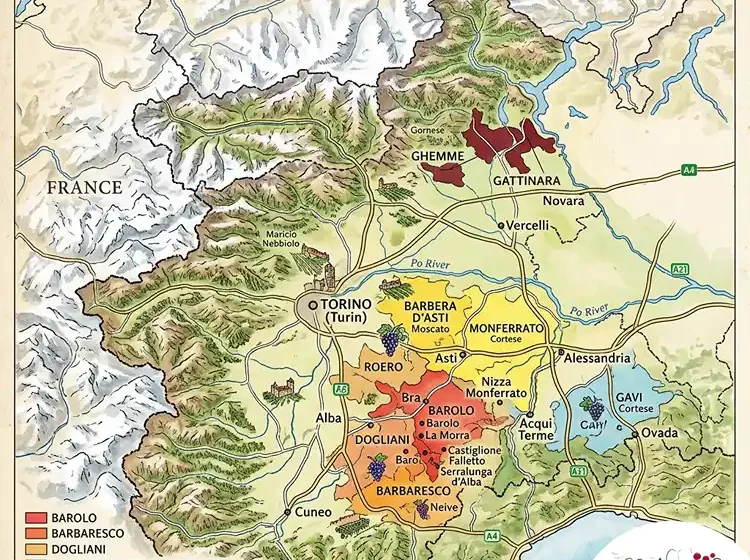
The Piedmont Italy wine region is one of the most prestigious and fascinating wine destinations in the world. Located in northwest Italy and surrounded by the Alps, this region is renowned for producing some of the finest wines on the planet, including Barolo and Barbaresco. However, beyond these famous names lies a diverse and complex wine culture that every wine lover should explore.
What Makes the Piedmont Italy Wine Region Unique?
The Piedmont Italy wine region stands out for its exceptional combination of geography, climate, and tradition. Nestled between the Alps to the north and the Apennines to the south, the region benefits from a unique microclimate shaped by dramatic temperature shifts between day and night.
These temperature variations, along with frequent morning fog, play a crucial role in grape development. The fog (which inspired the name of the Nebbiolo grape) slowly clears during the day, allowing vineyards on the hillsides to receive optimal sunlight. This results in grapes with excellent balance, complexity, and aging potential.
Unlike flatter wine regions, the best vineyards in Piedmont are located on slopes. These elevated positions ensure better sun exposure and drainage, which are essential for producing high-quality wines.
Key Grapes of the Piedmont Italy Wine Region
Understanding the Piedmont Italy wine region begins with its grape varieties. While there are many, a handful dominate and define the region’s identity.
Nebbiolo: The King of Piedmont
Nebbiolo is the most prestigious grape in the Piedmont Italy wine region. It is responsible for iconic wines like Barolo and Barbaresco.
Despite its light color, Nebbiolo produces wines with powerful tannins, high acidity, and remarkable aging potential. Aromas often include rose, cherry, and earthy notes. These wines can evolve beautifully over decades, making them highly sought after by collectors.
Barbera: The Local Favorite
Barbera is the most widely planted grape in the Piedmont Italy wine region and a staple in local households.
It typically produces medium-bodied wines with vibrant acidity and flavors of red and black fruits, such as raspberry and blackberry. Compared to Nebbiolo, Barbera is more approachable and often offers excellent value for money.
Dolcetto: Fruity and Easy-Drinking
Dolcetto wines are known for their soft tannins and low acidity, making them ideal for everyday drinking.
In the Piedmont Italy wine region, Dolcetto offers flavors of plum, blackberry, and subtle floral notes. Despite its name (which means “little sweet one”), it is usually dry.
White Wines of the Piedmont Italy Wine Region
Although red wines dominate, the Piedmont Italy wine region also produces exceptional white wines that deserve attention.
Moscato: Sweet and Aromatic
Moscato wines, especially Moscato d’Asti, are among the most प्रसिद्ध sweet wines in Italy. They are lightly sparkling, low in alcohol, and bursting with aromas of peach, orange blossom, and honey.
These wines are perfect for dessert or as a refreshing aperitif.
Cortese: Crisp and Elegant
Cortese is best known for producing Gavi wines, which are fresh, mineral-driven, and highly food-friendly.
In the Piedmont Italy wine region, Cortese wines often feature notes of lemon, green apple, and a subtle almond finish.
Arneis: The Hidden Gem
Arneis is an increasingly popular white grape that offers flavors of pear, peach, and citrus.
Often grown in the Roero area, it provides a softer and more aromatic alternative to other Italian white wines.
Famous Wine Areas Within Piedmont
While the Piedmont Italy wine region includes many subregions, a few stand out internationally.
Barolo
Often referred to as the “King of Wines,” Barolo is made exclusively from Nebbiolo grapes. These wines are bold, structured, and capable of aging for decades.
Barbaresco
Barbaresco is another top-tier Nebbiolo wine but tends to be slightly more approachable and elegant compared to Barolo.
Asti
Asti is famous for its sweet sparkling wines made from Moscato. It represents a completely different style compared to Piedmont’s powerful reds.
Food Pairings in the Piedmont Italy Wine Region
One of the highlights of exploring the Piedmont Italy wine region is its gastronomy. The wines are deeply connected to the local cuisine, which is rich, hearty, and full of flavor.
Classic pairings include:
- Barolo or Barbaresco with truffle dishes
- Barbera with pasta and tomato-based dishes
- Dolcetto with everyday meals and light meats
- Moscato d’Asti with desserts
Traditional foods like tajarin pasta, risotto, and dishes featuring white truffles elevate the wine experience even further.
Why You Should Explore the Piedmont Italy Wine Region
The Piedmont Italy wine region offers much more than just famous labels. It is a destination where tradition, terroir, and innovation come together to create wines of exceptional quality and diversity.
Whether you are a seasoned wine enthusiast or just beginning your journey, Piedmont provides an unparalleled opportunity to discover new flavors, grapes, and styles.
From the powerful and age-worthy Nebbiolo wines to the refreshing whites and sweet sparkling Moscato, this region truly has something for everyone.
What is the region of Piedmont famous for wine?
The piedmont italy wine region is famous for producing some of the most prestigious and age-worthy wines in the world, particularly those made from the Nebbiolo grape. This region, located in northwest Italy, has earned global recognition thanks to iconic wines such as Barolo and Barbaresco, which are often considered among the finest red wines ever produced.
One of the main reasons the piedmont italy wine region stands out is its unique combination of climate, geography, and tradition. Surrounded by the Alps and influenced by both continental and Mediterranean weather patterns, the region benefits from ideal conditions for slow grape ripening. This allows wines to develop complex aromas, balanced acidity, and strong aging potential.
In addition to Nebbiolo, Piedmont is also known for other important grape varieties such as Barbera and Dolcetto. Barbera wines are appreciated for their bright acidity and fruit-forward character, while Dolcetto offers softer, easy-drinking styles that are popular among locals.
The region is also notable for its high number of DOCG classifications, Italy’s highest quality designation for wines. In fact, Piedmont has more DOCG wines than any other Italian region, reinforcing its reputation for excellence.
Beyond red wines, the piedmont italy wine region is also famous for Moscato d’Asti, a lightly sparkling, sweet wine with floral and fruity aromas that is enjoyed worldwide.
Overall, Piedmont is famous not just for individual wines, but for its deep-rooted wine culture, quality standards, and diversity of styles.
Why is Barolo so expensive?
Barolo, one of the flagship wines of the piedmont italy wine region, is often considered expensive due to a combination of strict production rules, limited supply, and exceptional quality.
First, Barolo is made exclusively from the Nebbiolo grape, which is notoriously difficult to cultivate. It requires very specific conditions to ripen properly, and those conditions are only found in select areas within the piedmont italy wine region. This naturally limits production.
Additionally, Barolo wines must follow strict aging regulations. By law, they must be aged for a minimum of three years before release, including at least 18 months in oak barrels. For “Riserva” wines, the aging period extends to at least five years. This long production timeline increases costs for producers, which is reflected in the final price.
Another key factor is the aging potential of Barolo. These wines can improve for decades, making them highly desirable among collectors and investors. As demand grows globally, prices naturally rise.
The terroir also plays a significant role. Vineyards in areas like La Morra, Serralunga d’Alba, and Monforte d’Alba are highly sought after, and land prices are extremely high. This further contributes to the cost of production.
Finally, Barolo’s reputation as the “King of Wines” adds a prestige factor. It is often associated with luxury, fine dining, and special occasions.
All these elements combined make Barolo one of the most expensive and respected wines from the piedmont italy wine region.
What wine is from the Piedmont region of Italy?
The piedmont italy wine region produces a wide variety of wines, but it is most famous for its red wines made from indigenous grape varieties. The most iconic of these is Nebbiolo, which is used to produce world-renowned wines such as Barolo and Barbaresco.
Nebbiolo wines are known for their high acidity, firm tannins, and complex aromas of rose, cherry, tar, and earth. These characteristics make them ideal for long-term aging and a favorite among wine collectors.
Another important wine from the piedmont italy wine region is Barbera. This grape produces wines that are more approachable and fruit-driven, with flavors of blackberry, plum, and spice. Barbera wines are widely consumed locally and are known for offering excellent value.
Dolcetto is also a key wine from the region. Unlike its name suggests, it is typically dry and offers soft tannins with flavors of dark fruit and almond. It is often enjoyed as an everyday wine.
In addition to red wines, the piedmont italy wine region also produces notable white wines. Moscato d’Asti is a sweet, lightly sparkling wine with aromatic notes of peach and orange blossom. Cortese, used in Gavi wines, offers a crisp and refreshing profile with citrus and mineral notes.
Other interesting wines include Arneis, a fresh and aromatic white, and Brachetto, a lightly sparkling red with sweet, fruity characteristics.
Overall, the piedmont italy wine region is defined by its diversity and commitment to quality across both red and white wines.
What is the most beautiful town in Piedmont, Italy?
The piedmont italy wine region is home to many picturesque towns, but one of the most beautiful and widely admired is Barolo. Nestled among rolling vineyards and scenic hills, Barolo offers breathtaking views and a deep connection to the region’s wine heritage.
Barolo is not only visually stunning but also historically significant. The town is closely associated with the production of Barolo wine, making it a must-visit destination for wine enthusiasts. Its charming streets, traditional architecture, and hilltop castle create a postcard-perfect setting.
Another contender for the most beautiful town in the piedmont italy wine region is La Morra. Known for its panoramic viewpoints, La Morra offers some of the most spectacular vineyard landscapes in the area. Visitors can enjoy sweeping views of the Langhe hills, especially at sunset.
Alba is also worth mentioning. While slightly larger, it combines historic charm with vibrant local culture. It is famous for its white truffles and lively food scene, making it a key destination within the piedmont italy wine region.
Barbaresco, though smaller, is equally enchanting. Its quiet atmosphere, medieval tower, and surrounding vineyards make it an ideal place for those seeking a more tranquil experience.
Ultimately, beauty in Piedmont is subjective, but what makes these towns special is the combination of stunning landscapes, rich history, and deep-rooted wine traditions that define the piedmont italy wine region.
What is the wine city in Piedmont Italy?
When referring to the “wine city” of the piedmont italy wine region, Alba is often considered the main hub. Located in the heart of the Langhe area, Alba serves as a central point for wine production, gastronomy, and tourism.
Alba is internationally known for its white truffles, but it is equally important as a gateway to some of the most prestigious wine areas in Italy, including Barolo and Barbaresco. Its strategic location makes it the perfect base for exploring the piedmont italy wine region.
The city itself is vibrant and full of character, with historic buildings, lively markets, and a strong culinary tradition. Throughout the year, Alba hosts numerous food and wine events, attracting visitors from around the world.
In addition to Alba, other towns like Asti and Barolo also play significant roles in the wine culture of the piedmont italy wine region. Asti is famous for its sparkling Moscato wines, while Barolo is synonymous with one of Italy’s most prestigious red wines.
However, Alba stands out because of its combination of accessibility, cultural richness, and proximity to top vineyards. It is often the starting point for wine tours and tastings.
For anyone looking to experience the essence of the piedmont italy wine region, Alba is undoubtedly the city that best represents its wine heritage.
What are the top 3 wine regions in Italy?
Italy is home to many world-class wine regions, but the top three are often considered to be Piedmont, Tuscany, and Veneto. Among them, the piedmont italy wine region stands out for its focus on high-quality, terroir-driven wines.
Piedmont is best known for its Nebbiolo-based wines, such as Barolo and Barbaresco. These wines are celebrated for their complexity, structure, and aging potential. The region also produces excellent Barbera, Dolcetto, and Moscato wines, showcasing a wide range of styles.
Tuscany is another leading wine region, famous for wines like Chianti, Brunello di Montalcino, and Super Tuscans. Sangiovese is the dominant grape here, producing wines with bright acidity and elegant flavors.
Veneto, located in northeastern Italy, is known for its diversity. It produces Amarone della Valpolicella, a rich and powerful red wine, as well as Prosecco, one of the most popular sparkling wines in the world.
What makes the piedmont italy wine region unique among these top three is its emphasis on indigenous grape varieties and traditional winemaking methods. While Tuscany and Veneto also produce exceptional wines, Piedmont is often seen as the most refined and complex of the three.
Together, these regions represent the pinnacle of Italian winemaking and offer a comprehensive view of the country’s rich wine heritage.
Best wines from Piedmont Italy
The piedmont italy wine region is home to some of the most prestigious and sought-after wines in the world. Among the best wines from this region, Barolo and Barbaresco stand at the top. Both are made from the Nebbiolo grape and are known for their complexity, high tannins, and exceptional aging potential. These wines often develop aromas of rose, cherry, leather, and earthy notes over time.
Another standout from the piedmont italy wine region is Barbera, which offers a more approachable style. It is loved for its vibrant acidity, juicy fruit flavors, and versatility when pairing with food. Barbera wines are often more affordable than Nebbiolo-based wines, making them a great entry point into the region.
Dolcetto is also among the best wines for everyday drinking. It is softer, fruit-forward, and typically consumed young. Despite being less famous internationally, it plays an essential role in local wine culture.
For those who prefer white or sweet wines, Moscato d’Asti is a must-try. This lightly sparkling wine is aromatic, low in alcohol, and perfect for desserts or casual occasions.
Ultimately, the best wines from the piedmont italy wine region depend on personal taste, but the region consistently delivers quality across a wide range of styles.
Piedmont italy wine region towns
The piedmont italy wine region is filled with charming towns that are deeply connected to wine production and local traditions. Among the most important towns is Barolo, a small but iconic village that gives its name to one of Italy’s most prestigious wines. Surrounded by vineyards, it offers breathtaking landscapes and a strong wine identity.
Another key town in the piedmont italy wine region is Barbaresco. Smaller and quieter than Barolo, it is equally significant in terms of wine quality and offers a more relaxed atmosphere for visitors.
La Morra is known for its panoramic views over the Langhe hills, making it one of the most scenic towns in the region. It is also home to some of the best vineyards producing Nebbiolo wines.
Alba stands out as the cultural and gastronomic center of the piedmont italy wine region. It is famous for white truffles and serves as a base for exploring nearby wine areas.
Other notable towns include Asti, known for its sparkling wines, and Monforte d’Alba, which combines history, architecture, and excellent wine production.
Each of these towns contributes to the rich identity of the piedmont italy wine region, offering visitors a unique blend of wine, food, and culture.
Best piedmont italy wine region
When discussing the best area within the piedmont italy wine region, the Langhe hills are widely considered the top choice. This UNESCO World Heritage site includes famous subregions such as Barolo, Barbaresco, and Roero, all known for producing high-quality wines.
The Langhe is particularly renowned for its Nebbiolo-based wines, which reach their highest expression in Barolo and Barbaresco. These wines are often regarded as some of the finest in the world due to their structure, elegance, and aging potential.
Another important area within the piedmont italy wine region is Monferrato. This region is known for producing Barbera and Dolcetto wines, often at more accessible prices. It offers a slightly different landscape and a more relaxed, less touristy experience.
Roero, located across the Tanaro River from the Langhe, is gaining recognition for both red and white wines, especially those made from Arneis. It provides excellent value and a growing reputation among wine enthusiasts.
Ultimately, the “best” part of the piedmont italy wine region depends on what you are looking for. For prestige and iconic wines, Langhe is unmatched. For value and authenticity, Monferrato and Roero are excellent alternatives.
Piedmont italy wine region cities
The piedmont italy wine region is not only about vineyards and small villages—it also includes vibrant cities that play a key role in its wine culture.
Alba is often considered the wine capital of the region. It is centrally located and surrounded by some of the most prestigious vineyards in Italy. The city is known for its culinary excellence and hosts international events such as the white truffle fair.
Asti is another important city in the piedmont italy wine region. It is famous for its production of Moscato d’Asti and Asti Spumante, both popular sparkling wines. Asti also has a rich history and beautiful architecture.
Turin (Torino), the capital of Piedmont, is the largest city in the region. While not a wine-producing city itself, it plays a significant role in promoting and distributing wines from the piedmont italy wine region. It is also a cultural hub with museums, restaurants, and historic landmarks.
Other smaller cities like Bra and Acqui Terme contribute to the diversity of the region, offering unique experiences related to food, wine, and local traditions.
Together, these cities enhance the appeal of the piedmont italy wine region by combining urban culture with world-class wine experiences.
Piemonte wine price
Wine prices in the piedmont italy wine region can vary significantly depending on the type of wine, producer, and aging potential. At the higher end, prestigious wines like Barolo and Barbaresco can range from €40 to several hundred euros per bottle, especially for aged or collectible vintages.
These higher prices are due to strict production regulations, limited vineyard areas, and the long aging process required before release. Additionally, the global demand for these wines continues to grow, which drives prices even higher.
On the other hand, the piedmont italy wine region also offers more affordable options. Barbera and Dolcetto wines are typically priced between €10 and €25, making them accessible for everyday consumption. These wines provide excellent value while still reflecting the quality and character of the region.
Moscato d’Asti is another affordable option, often priced between €8 and €20. Its popularity and approachable style make it widely available.
It is also worth noting that prices can vary depending on whether you purchase directly from wineries, local shops, or international markets.
Overall, the piedmont italy wine region offers a wide price range, making it possible for both casual drinkers and collectors to find wines that suit their budget.
Piedmont wine types
The piedmont italy wine region is known for its diversity, offering a wide range of wine types that cater to different tastes and occasions.
Red wines dominate the region, with Nebbiolo, Barbera, and Dolcetto being the most important grape varieties. Nebbiolo produces powerful, structured wines like Barolo and Barbaresco, which are known for their aging potential. Barbera offers a more fruit-forward and acidic profile, while Dolcetto provides softer, easy-drinking wines.
In addition to reds, the piedmont italy wine region also produces notable white wines. Moscato d’Asti is a sweet, lightly sparkling wine with aromatic notes of peach and citrus. Cortese, used in Gavi wines, delivers crisp and refreshing flavors with a mineral edge.
Arneis is another important white wine, offering a balance between fruitiness and freshness. It is often considered a hidden gem of the region.
Sparkling wines are also part of the region’s identity, particularly those made in Asti and Alta Langa.
Overall, the piedmont italy wine region stands out for its ability to produce high-quality wines across multiple styles, from bold reds to elegant whites and refreshing sparkling wines.
