

Regions, Châteaux & Best Time

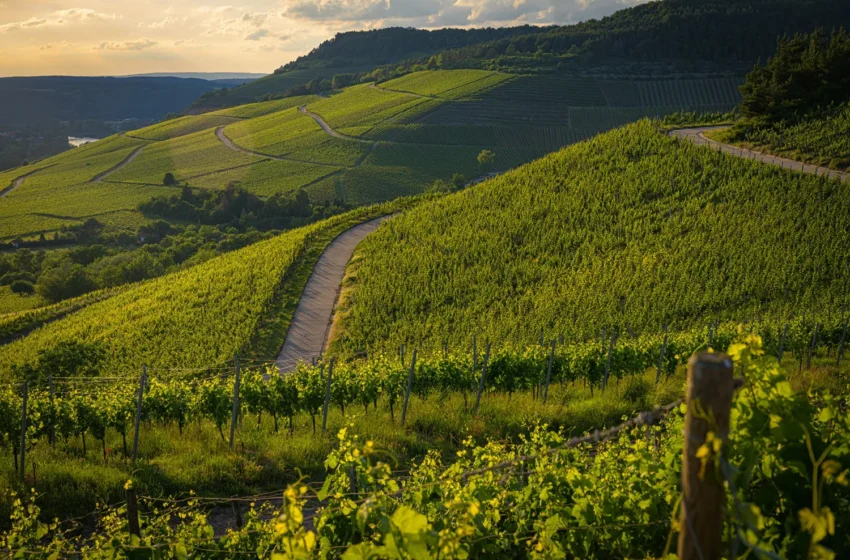
A Bordeaux vineyard tour is not one experience but half a dozen, and the difference between a good trip and a forgettable one usually comes down to understanding that before you book. Bordeaux is not a single hillside you can drive around in an afternoon: it is roughly 110,000 hectares of vines wrapped around a city, split by two rivers, and divided into more than sixty appellations whose wines taste genuinely different from one another. Médoc and Saint-Émilion are barely ninety minutes apart, yet they build their wines from different grapes, on different soils, in different styles. Sauternes, forty-five minutes south, makes something that has almost nothing in common with either. This guide explains how the region is put together, which parts are worth your days, and how to visit them properly — including the practical rules that catch first-time visitors out, such as the fact that almost every château in Bordeaux receives guests by appointment only.
What a Bordeaux vineyard tour actually involves
Strip away the marketing and a vineyard visit in Bordeaux follows a fairly consistent shape. You arrive at an estate at a booked time. Someone — often a member of the family, sometimes a dedicated host — walks you through the vines, explains the soil under your feet and why it matters, and then takes you into the working buildings: the vat room, the barrel cellar, occasionally the bottling line. Then you taste, usually two to four wines, sometimes across different vintages so you can feel what age does to a Cabernet Sauvignon or a Merlot. The whole thing takes between an hour and ninety minutes. That single number governs everything else about your itinerary.
Because a visit is an hour and a half, and because estates are spread across a large territory with lunch to fit in somewhere, three appointments is a realistic maximum for one day and two is often the more pleasant number. Visitors who try to squeeze in four end up arriving late, apologising, and tasting the last flight of the day with a palate that stopped registering tannin two estates ago. Building a Bordeaux vineyard tour is therefore an exercise in restraint: pick a sub-region, do it properly, and leave the rest for another day or another trip.
The other thing worth internalising early is that Bordeaux’s châteaux are not shops with opening hours. The overwhelming majority of estates that receive visitors do so by appointment, arranged in advance through their own website or through the agency organising your trip. Family-run properties in the less famous appellations can often accommodate you with a couple of weeks’ notice. Classified estates in Pauillac or Margaux are a different proposition entirely — the most sought-after names are booked out months ahead, and during harvest they may close their doors to visitors altogether because everyone who would normally show you round is picking grapes.
The six faces of Bordeaux: where to go on a Bordeaux vineyard tour
Bordeaux organises itself around the Gironde estuary and the two rivers that feed it, the Garonne and the Dordogne. That geography is not decoration; it dictates the soils, which dictate the grapes, which dictate the wines. Below are the six areas that matter most to a visitor, and what each one actually offers on the ground.

Médoc: the grand architecture of the Left Bank
The Médoc runs north from Bordeaux along the left bank of the estuary, a flat ribbon of gravel laid down by glacial rivers thousands of years ago. Gravel drains fiercely and stores heat, which is exactly what late-ripening Cabernet Sauvignon needs, and that single fact explains why the world’s most famous red wine addresses are lined up along one road here. The communal appellations — Margaux, Saint-Julien, Pauillac, Saint-Estèphe — sit within the broader Haut-Médoc, and the density of grand estates is unlike anywhere else in France.
Visiting the Médoc is a slightly formal experience, and that is part of its appeal. The buildings are imposing, the cellars are cathedral-like, and the wines are built for the long haul: firm tannin, blackcurrant and cedar, a structure that rewards a decade in the bottle. It is the appellation to choose if you want to understand why Bordeaux acquired its reputation in the first place. Driving from one end of the Médoc to the other takes roughly forty minutes, so a full day here comfortably covers two or three estates in different communes and lets you taste the differences between them — the perfumed elegance of Margaux against the muscular density of Pauillac.
Saint-Émilion: medieval stone and Merlot
Cross the Dordogne to the right bank and everything changes. The gravel gives way to limestone and clay, Cabernet Sauvignon gives way to Merlot and Cabernet Franc, and the flat horizon gives way to a limestone plateau with a genuinely beautiful medieval town sitting on top of it. Saint-Émilion is a UNESCO World Heritage Site, and unusually, the listing covers not just the town but the entire surrounding jurisdiction of vineyards — the first wine landscape in the world to be recognised that way.
For most visitors this is the most rewarding single day in Bordeaux, because it delivers on two fronts at once. The wines are rounder and more immediately approachable than their Left Bank counterparts, with plum and violet where the Médoc gives cedar and graphite. And when you are done tasting there is an actual place to explore: cobbled streets, a monolithic church carved directly downwards out of the limestone bedrock, and the underground quarries from which the town was built and in which its wine still ages. Estates here tend to be smaller and more personal than in the Médoc, and Grand Cru tastings are widely available.
Pomerol: the small appellation with the big reputation
Pomerol sits immediately next to Saint-Émilion, occupies a fraction of the land, has no classification system of its own, and produces some of the most expensive wine on earth. Its plateau holds a seam of iron-rich clay — locally called crasse de fer — that gives Merlot an extraordinary density and a savoury, almost truffled character. There are no grand châteaux here in the Médoc sense; the properties are modest farmhouses surrounded by a few hectares of vines, and the contrast between the buildings and the price of what comes out of them is one of the quiet jokes of the region.
Pomerol is the hardest area to visit spontaneously precisely because production is tiny and demand is not. It works best as an add-on to a Saint-Émilion day rather than a destination in itself, and it is the clearest example of why having someone with local relationships open doors on your behalf is worth more here than anywhere else in Bordeaux.
Graves and Pessac-Léognan: where Bordeaux wine began
Graves runs south from the city along the left bank of the Garonne, and it is the oldest vineyard area in the region — wine was being made and shipped from here centuries before the Médoc was drained and planted. Its northern section, Pessac-Léognan, was carved out as its own appellation in 1987 and is the only part of Bordeaux with a serious claim to being equally distinguished in red and white.
The reds share the Médoc’s Cabernet backbone but pick up a smoky, earthy note from the gravelly, sandy soils; the whites, blends of Sauvignon Blanc and Sémillon often fermented and aged in barrel, are among the most age-worthy dry whites in France and are badly underrated by visitors who come to Bordeaux assuming it is a red-only region. Pessac-Léognan also has the practical advantage of being close to the city — some of its vineyards are effectively in the suburbs — which makes it the easiest serious appellation to reach if your time is short.
Sauternes: noble rot and patience
Continue south past Graves and the landscape starts to fold. Here the cold Ciron stream runs into the warmer Garonne, and the collision produces autumn morning mists that burn off into sunny afternoons. That specific microclimate encourages Botrytis cinerea, noble rot, a fungus that shrivels Sémillon and Sauvignon Blanc grapes on the vine and concentrates their sugars and aromatics into something extraordinary.
Making Sauternes is agriculturally absurd. Pickers go through the vineyard repeatedly over several weeks, selecting individual botrytised berries, and yields are a fraction of what a normal vineyard produces. The result is a golden wine of apricot, honey and candied citrus held together by an acidity that stops it from cloying, and it ages for decades. Sauternes is also the least-visited of the major areas and the most consistently surprising to people who arrive convinced they do not like sweet wine. The estates are typically welcoming, the tastings are illuminating, and it pairs naturally with a Graves morning to make a very satisfying day.
Entre-Deux-Mers: the green, unhurried half
Between the Garonne and the Dordogne — hence the name, “between two seas” — lies the largest and least formal part of the Bordeaux vineyard. It is rolling, green, dotted with bastide villages, abbeys and small family properties, and its appellation name applies specifically to crisp dry whites built on Sauvignon Blanc, though plenty of red is made here under the broader Bordeaux appellation.
Entre-Deux-Mers is where you go for a different rhythm: no appointment anxiety, no classified-growth solemnity, and a much better chance of being poured a glass by the person who actually pruned the vines. It is also the most cycling-friendly area, thanks to the Roger Lapébie greenway that runs out of Bordeaux along a converted railway line. For travellers who have already done the prestige circuit, this is often the part they end up talking about afterwards.
Bordeaux wine regions compared: choosing where to spend your days
The table below sets the six areas side by side on the criteria that actually change your experience — what is planted, how the wine tastes, and the kind of visit each one delivers. Use it to decide where your available days go rather than trying to cover everything.
| Area / appellation | Dominant grape | Style in the glass | Who it suits best |
|---|---|---|---|
| Médoc (Margaux, Saint-Julien, Pauillac, Saint-Estèphe) | Cabernet Sauvignon | Firm, structured reds — blackcurrant, cedar, graphite; built to age | First-timers who want the grand châteaux and the classic Bordeaux reference points |
| Saint-Émilion | Merlot with Cabernet Franc | Rounder, plummier reds with violet and spice; approachable younger | Travellers who want wine plus a walkable UNESCO town and underground heritage |
| Pomerol | Merlot | Dense, velvety, savoury reds with an iron-and-truffle edge | Experienced wine lovers happy to add a rare, hard-to-book stop to a Right Bank day |
| Graves & Pessac-Léognan | Cabernet Sauvignon; Sauvignon Blanc and Sémillon | Smoky, earthy reds and barrel-aged dry whites of real ageing potential | Anyone short on time, or curious about Bordeaux’s serious white wines |
| Sauternes (and Barsac) | Sémillon with Sauvignon Blanc | Golden sweet wines — apricot, honey, candied citrus, cut by bright acidity | Curious palates and anyone who thinks they dislike sweet wine |
| Entre-Deux-Mers | Sauvignon Blanc (whites); Merlot (reds) | Crisp, citrusy dry whites and easy-going everyday reds | Return visitors, cyclists, and travellers who prefer small family estates |
Read across the rows and a sensible planning logic appears. Two days in the region means one bank and one theme — most people choose the Médoc or Saint-Émilion. Three or four days lets you cross the river and add Graves and Sauternes, which is where the contrast between Bordeaux’s red and sweet-white identities finally makes sense. Anything beyond that buys you Pomerol, Entre-Deux-Mers and the luxury of unhurried afternoons.
Left Bank or Right Bank: the distinction that makes Bordeaux click
If you remember one thing from this guide, make it this. Bordeaux’s wines divide along the water, and once you hear the difference you can never unhear it.
The Left Bank — Médoc and Graves, west and south of the Garonne and the Gironde — is gravel country. Gravel drains hard, forcing vines to root deep, and it radiates stored daytime heat back at the fruit through the night. That suits Cabernet Sauvignon, a thick-skinned, late-ripening grape that would struggle to reach maturity in colder ground. Cabernet-dominant blends give you tannin, structure and dark, firm fruit, with cedar and pencil-shaving notes that develop over years. These are wines that are often difficult to love at three years old and magnificent at fifteen.
The Right Bank — Saint-Émilion, Pomerol, Fronsac and their satellites, north and east of the Dordogne — is limestone and clay. Clay holds water and stays cooler, which suits early-ripening Merlot; limestone underneath supplies freshness and a mineral spine. The blends are Merlot-led, frequently with Cabernet Franc for perfume and lift. The results are softer in texture, more generous with plum and violet, and easier to enjoy young — without being any less serious.
This is not a hierarchy, and treating it as one is the most common mistake visitors make. It is a genuine stylistic fork, and the most useful thing you can do on a Bordeaux vineyard tour is taste both banks within a few days of each other so the contrast lands while your memory is fresh. It is also the reason a well-designed multi-day trip beats a single day-excursion: one day gives you a snapshot, three or four give you the comparison. If the idea of tasting your way across French terroir appeals more broadly, the same logic underpins our other wine tours in France, and it is worth knowing which French wine grape varieties dominate each region before you go.
Taste both banks without planning a thing
Our Bordeaux trips are built around exactly this contrast: full days in the Médoc and in Saint-Émilion with a local wine guide, private transport and the château appointments already secured.
See our private wine travels in France →
How to plan a Bordeaux vineyard tour that actually works
Most disappointing Bordeaux trips fail for logistical reasons rather than lack of good wine. Here is what to get right.
Book far earlier than feels necessary. Small family estates in Entre-Deux-Mers or the outer Médoc may take a booking two or three weeks out. Well-known properties in the prestigious communes work on a different timescale, and the most famous names are routinely full six to nine months ahead. If there is a specific estate you have dreamed about, that request should be the first thing you make, not the last.
Plan around the driving, not around the map. Distances in Bordeaux look trivial and behave otherwise. Travelling the length of the Médoc takes about forty minutes; hopping from the Left Bank to the Right Bank is closer to ninety minutes each way, because you have to work around the rivers. Pairing a Pauillac morning with a Saint-Émilion afternoon means spending three hours in a car and arriving at both places flustered. Group your day within one bank.
Take the drink-driving limit seriously. France enforces a blood alcohol limit of 0.05%, meaningfully stricter than in many countries, with roadside testing that is neither rare nor tolerant. Three tastings across a day is not compatible with driving yourself, and spitting is only a partial answer. This is the single strongest practical argument for a driven tour, whether that means a hired driver, a small-group departure or a private trip with transfers included.
Dress a notch above casual. There is no formal code, but the classified estates are working businesses with a certain sense of occasion, and smart-casual will always feel right. Bring flat shoes: you will walk on gravel and down cellar steps. Leave strong perfume and aftershave at the hotel — it interferes with everyone’s ability to smell the wine, and hosts notice.
Build in lunch, properly. The Bordelais take the midday meal seriously and so should you. Rural restaurants in Pauillac, Saint-Julien or around Saint-Émilion generally stop serving by around two o’clock, and turning up at 14:30 hoping for a table is how visitors end up eating a service-station sandwich in a very beautiful landscape. A break of ninety minutes between the morning and afternoon estate also resets your palate, which materially improves the second tasting.
Bordeaux beyond the vines: the city, the museum and the table
It would be a mistake to treat Bordeaux city as merely a base for the vineyards. The 18th-century centre is a UNESCO World Heritage Site in its own right, an ensemble of pale limestone façades along the curve of the Garonne that was scrubbed clean of two centuries of soot in a restoration that transformed the place. The Place de la Bourse and its Miroir d’Eau — a thin sheet of water that reflects the buildings and periodically dissolves into mist — is the image most people carry home, and the surrounding grid of pedestrianised streets is full of wine bars, cheese shops and small restaurants that reward aimless wandering.
The Cité du Vin, the striking curved building downstream on the riverbank, is worth a half day. It is not a museum of Bordeaux wine specifically but of wine as a global cultural phenomenon, spread across roughly 3,000 square metres of interactive exhibits, and the tasting room at the top comes with a panorama of the city. Going early in your trip is smart: it gives you vocabulary and context that make the estate visits that follow considerably more interesting.
Then there is the table. Bordeaux’s cooking is built for its wines — entrecôte grilled over vine cuttings, lamprey slow-cooked in red wine, oysters from the Arcachon basin just down the road, and the canelé, a small fluted cake with a burnt-caramel crust and a soft vanilla centre that exists because egg whites were once used to fine the wine and the yolks needed a purpose. A river cruise on the Garonne with a glass in hand is a gentle way to see the waterfront from the angle the 18th-century merchants intended. If you want to see how this pattern of vines, cities and cooking repeats across the country, our guide to wine tourism in France covers the wider picture, and the piece on French red wines is a useful primer before you taste.

Small group or private? Choosing the format of your Bordeaux vineyard tour
Once you have decided where to go, the remaining question is how. There are broadly three ways to see the Bordeaux vineyards, and they suit very different travellers.
Independently, by car or public transport. Cheapest, most flexible, most work. You handle every appointment yourself, in a region where the best estates answer slowly and the drink-driving rules mean one of you is not really tasting. It works well in Entre-Deux-Mers and for a Saint-Émilion day by train; it works poorly for the classified growths.
Small group departures. A fixed itinerary with a set date, a professional guide and a handful of other travellers. You get the estate access and the driven transport without the cost of a fully private arrangement, and the group dynamic is genuinely part of the pleasure for many people — a table of six to eight comparing notes over lunch is a good afternoon. The trade-off is the fixed dates and the fixed route. Our small group tours across Europe run on this model.
Private trips. Your own vehicle, your own guide, your own pace, and an itinerary that can be adjusted around what you actually want to drink. This is the format that makes hard-to-access estates possible and the one to choose if you are travelling as a couple, a family or a group of friends who would rather not share. It is how our private tours are built.
One more consideration: where the trip starts. Bordeaux is a two-hour TGV ride from Paris, which means a Bordeaux vineyard tour combines easily with time in the capital — the same logic behind our France wine tours from Paris — or with another French region entirely. Travellers who fall for Bordeaux’s Cabernet often want to understand Pinot Noir next, which leads naturally to the Burgundy wine region, and the broader map of the wine regions of France is worth studying before you commit your dates.
Our Bordeaux vineyard tours
Viavinum designs Bordeaux trips the way we would want to travel ourselves: small numbers, private transport, a local guide who knows Bordeaux wine rather than a general city guide reading from notes, and château appointments confirmed long before you arrive. We do not pack five estates into a day. We book two or three, leave room for a proper lunch, and let the region set the pace. The trip starts and ends in Bordeaux, with airport transfers included, so the only thing you organise is how you get to the city.
Our Bordeaux vineyard tour is the six-day Bordeaux Châteaux and Vineyards Tour: a private trip for two to eight people, guided in English or Spanish, based for five nights in a four-star hotel in the centre of Bordeaux. There are two departures this autumn — 2-7 October and 23-28 October — and both follow exactly the same programme, so the only thing to decide is which set of dates suits your calendar. October is deliberate: it puts you in the vineyard at the end of the harvest, when the cellars are working and the vines are turning.
The six days are laid out like this.
| Day | Where | What the day holds |
|---|---|---|
| Day 1 | Bordeaux | Arrival under your own arrangements, private transfer from the airport and check-in for five nights in the city centre. |
| Day 2 | Bordeaux | Three-hour private guided walking tour of the city with a local guide, entry to the Cité du Vin, and a one-hour private boat trip on the Garonne with a cheese and charcuterie board and a glass of wine. |
| Day 3 | Saint-Émilion | Full eight-hour private day on the Right Bank: guided visits and Grand Cru tastings at two wineries, plus a guided walk through the medieval town and free time to explore it. |
| Day 4 | Médoc | Full eight-hour private day on the Left Bank: three château visits with expert-led tastings, the appellations of Margaux and Pauillac, and a lunch break in Pauillac or Saint-Julien. |
| Day 5 | Bordeaux | A free day — deliberately unscheduled, for the market, a museum, a bicycle, or simply an unhurried lunch. |
| Day 6 | Bordeaux | Breakfast, free time until check-out and a private transfer to the airport. |
Read across the itinerary and the logic of this guide is visible in it: one full day per bank, so the Merlot of Saint-Émilion and the Cabernet Sauvignon of the Médoc can be compared while both are fresh in the memory, with five winery visits in total rather than a forced march through a dozen. The city days at either end are not filler — they are where the Cité du Vin gives you the vocabulary and the restaurants give you the context. We also programme a shorter four-day Bordeaux format for travellers who only have a long weekend, covering the Médoc and Saint-Émilion without the city days; it is not currently on the calendar, so ask us if that is the shape of trip you want and we will build it around your dates.
How long does a Bordeaux vineyard tour last, and how many days do you need?
There are two different questions hiding inside this one. A single château visit lasts between sixty and ninety minutes, and that is fairly consistent across the region: a walk in the vines, a tour of the vat room and barrel cellar, and a seated tasting of two to four wines. A day tour built around those visits typically runs eight hours door to door from Bordeaux, which accommodates two or three estates and a real lunch. Anything advertised as covering four or five estates in a day is either cutting the visits very short or counting drive-past photo stops as visits.
The bigger question is how many days to give the region overall, and the honest answer is three to five. Two full days is the workable minimum: one on the Left Bank, one on the Right, which at least gives you the fundamental stylistic contrast — but it leaves nothing for the city, no margin for a slow lunch, and no chance of seeing Sauternes or Pessac-Léognan. Three days is comfortable. Four to six is where Bordeaux starts to open up: you can add a third wine area, spend proper time in the 18th-century centre, visit the Cité du Vin without rushing it, and still have an afternoon free.
Beyond about a week you hit diminishing returns unless you are visiting for professional reasons or you intend to explore the outer appellations — Blaye, Bourg, Fronsac, the Côtes de Bordeaux — where the wines are good value and the visits are relaxed. As a rule of thumb, count one wine area per day and no more. Bordeaux punishes over-scheduling more than most regions because the estates are formal, appointments are fixed, and arriving twenty minutes late genuinely matters. Our own Bordeaux trip is built at six days for exactly this reason: long enough to see both banks properly and still have the city and a free day, short enough to fit into a real holiday.
How do you get to the Bordeaux vineyards from Bordeaux city — and from Paris?
Getting to Bordeaux is the easy part. The TGV from Paris Montparnasse reaches Bordeaux Saint-Jean in a little over two hours, with roughly twenty-eight services a day from early morning to late evening, which makes a Paris-plus-Bordeaux trip entirely practical without flying. Bordeaux-Mérignac airport handles direct flights from across Europe and sits about half an hour from the centre. Both the station and the airport put you within easy reach of a hotel in the historic core, which is where you want to be based.
From the city out to the vines, your options depend on which area you have chosen. Saint-Émilion is the simplest: a regional train from Bordeaux Saint-Jean gets you there in under an hour, and although the station sits below the town, the walk up is manageable and the village itself is compact enough to explore on foot, with several estates within walking distance. For Graves and Sauternes, the TER line towards Langon stops at Podensac and at Barsac, both of which have a Maison des Vins where you can taste and get your bearings; from Barsac, a twelve-kilometre bike route runs out towards Yquem for those with the legs for it. Entre-Deux-Mers is best reached by bicycle on the Roger Lapébie greenway, a converted railway line that leaves the city and delivers you to the châteaux around Latresne, Cénac and Lignan-de-Bordeaux in about an hour of moderate pedalling.
The Médoc is the awkward one. There is no useful rail service along the estuary, the estates are spread over a long thin strip, and the great names are not walkable from anywhere. Realistically you need a car, a driver or an organised tour — and given that France’s blood alcohol limit is 0.05% and you will be tasting several wines, driving yourself means one member of the party spends the day not really participating. This is precisely the gap that organised departures fill: a driven vehicle, a guide who has the appointments in hand, and everyone in the group free to taste.
When is the best time of year for a Bordeaux vineyard tour?
The season runs from roughly April to October, and within that window your choice is a trade-off between atmosphere and availability.
Late spring, May and June, is arguably the most comfortable time to visit. The vines have leafed out and flowered, the countryside is green, temperatures are pleasant for walking through rows and standing in cellars, and the estates are calm and fully staffed. Availability is good, and you will not be competing with harvest-season crowds. The one thing to check is the professional calendar: Bordeaux hosts major trade events in some Junes that fill hotels and absorb estate attention.
September and October are the emotional high point. This is les vendanges, the harvest, and the region has an entirely different energy: tractors on the roads, fruit arriving at the reception area, the sweet smell of fermentation drifting out of the vat rooms. Tasting a berry off the vine and then the wine it becomes is a memory that outlasts most of a trip. Sauternes is at its most dramatic, since noble-rot picking runs in successive passes through October and sometimes into November. The catch is availability: harvest is the busiest working period of the year, many estates cut back or suspend visits precisely because their teams are picking, and those that do receive guests book out early. Reserve well ahead and stay flexible about which estates you see.
July and August are hot and, in August especially, quiet in the wrong way — much of France is on holiday, some smaller properties close entirely, and the region can feel half-shuttered. Winter, from November to March, has its own appeal: bare vines, empty cellars, unhurried hosts with time to talk, and hotel rates that reflect the season. January is the weakest month, with many estates closed. Our own Bordeaux departures are scheduled in October for a reason — it is when the vineyard is most alive — and booking a place on a fixed departure removes the availability problem entirely, since the château appointments are already secured.
Do you have to book Bordeaux châteaux in advance?
Yes — and this is the single most important practical fact about visiting Bordeaux. Unlike some wine regions where you can drive up to a tasting room and walk in, the great majority of Bordeaux estates that receive visitors do so strictly by appointment. There is no queue to join and no ticket window. Turning up unannounced at a classified property will get you a polite refusal at the gate, and quite often the gate will simply be closed.
How far ahead depends entirely on the estate’s profile. Family-run properties in Entre-Deux-Mers, the Côtes de Bordeaux, Blaye or the outer Médoc are usually happy to accommodate you with a couple of weeks’ notice, and sometimes a few days. Well-known estates in Saint-Émilion or Pessac-Léognan want a month or more, especially at weekends. The classified growths of the Médoc and the sought-after names of Pomerol operate on a scale of months: three to nine is the realistic range, and for the very top tier the honest answer is that public visits may not be available at all, with access running through wine merchants, importers and specialist agencies rather than a booking form.
Weekends compound the problem. Many estates receive visitors Monday to Friday only, or offer a reduced Saturday schedule and nothing on Sunday, because the tasting-room staff are not a separate department — they are the people who also run the property. If your trip includes a weekend, check this before you build the itinerary around it, and consider using those days for Saint-Émilion town, the Cité du Vin or a Maison des Vins, all of which are open without appointment.
This is where a trip organised by an agency earns its keep. Not because booking is impossible on your own — it is not — but because the appointments are made months ahead by someone with existing relationships, the timings are built to be achievable rather than optimistic, and if an estate cancels because harvest arrived early, somebody else solves it. On our Bordeaux departures the château visits are confirmed before the group is finalised.
What is the 1855 Classification and does it matter when you visit?
In 1855, Napoleon III wanted the best wines of Bordeaux presented at the Paris Universal Exposition, and asked the region to produce a ranking. The Bordeaux Chamber of Commerce passed the job to the brokers of the wine exchange, who did not taste anything: they simply sorted the estates by the prices their wines had commanded over the preceding decades, on the reasonable assumption that the market had already made the judgement. The result was a hierarchy of five tiers — premiers crus through cinquièmes crus — covering the red wines of the Médoc plus one estate from Graves, alongside a separate classification for the sweet wines of Sauternes and Barsac.
What makes it remarkable is its immobility. In some 170 years the list has been altered essentially twice: one estate added shortly after publication, and one promoted from second to first growth in 1973 after decades of campaigning. Bordeaux’s other classifications behave differently — Saint-Émilion revises its list roughly every ten years, which produces periodic drama, while Pomerol has never had one at all and manages perfectly well without.
Does it matter to a visitor? Partly. It is a genuine piece of history and it explains a great deal about why certain estates have the buildings, the reputations and the prices that they do; understanding it makes a drive through Pauillac far more legible. But it is a nineteenth-century snapshot of a nineteenth-century market, not a current quality guide. Plenty of estates ranked in the fifth growth today make wine that outperforms their position, some unclassified properties in the Médoc — the crus bourgeois and beyond — offer far better value, and the entire Right Bank, including Pomerol’s most coveted wines, does not appear on the 1855 list at all. Treat it as context rather than a shopping list. The most enjoyable Bordeaux vineyard tours mix a classified estate, for the sense of occasion, with smaller properties where the person pouring made the wine.
Can you visit the Bordeaux vineyards without a car?
You can, and more easily than the region’s reputation suggests — provided you choose your areas to suit the transport rather than the other way round.
Saint-Émilion is the standout. The regional train from Bordeaux Saint-Jean takes under an hour, and once you are there the town, its monolithic church, its underground quarries and a number of estates are all reachable on foot. It is entirely feasible as a self-directed day trip with a couple of tastings booked in advance. For Graves and Sauternes, the TER line south towards Langon puts you within reach of the Maison des Vins de Graves at Podensac and the Maison des Vins de Barsac-Sauternes, both of which pour a broad selection under one roof and can point you to nearby estates; renting a bike at Barsac opens up the twelve kilometres towards Yquem. Entre-Deux-Mers is the cyclist’s answer, thanks to the Roger Lapébie greenway running out of the city on a former railbed, flat enough for most fitness levels and dotted with small welcoming properties.
The gap in the car-free map is the Médoc, where the classified estates sit along a corridor with no practical public transport and considerable distances between them. If the grand châteaux are your priority — and for most first-time visitors they are — then a driven tour is not a luxury but the only sensible mechanism. That can mean a hired driver for the day, a scheduled small-group departure or a private multi-day trip with transfers built in. The advantage beyond mere transport is that a guide fills the drive time with context, and nobody in your party has to sit out the tasting to stay under France’s 0.05% limit.
What to expect at a Bordeaux wine tasting
A tasting in Bordeaux is a structured, seated affair more often than a casual pour, and knowing the shape of it helps you get more from it.
You will usually taste after the tour of the vines and cellar, not before, because the point is to connect what you have seen to what is in the glass. Expect two to four wines, poured in a deliberate order: whites before reds, younger before older, lighter before more structured. If the estate makes a second wine as well as its grand vin, you will often get both, and the comparison is genuinely instructive — same team, same vineyard, different plots and different selection. Your host will pour a small measure. That is not stinginess; it is the amount you need to swirl a wine properly and release its aromatics.
Look, swirl, smell, then taste. The smelling is the part most visitors rush and the part that carries most of the information. Ask questions — about the blend, the proportion of new oak, how the vintage behaved, what the estate does differently from its neighbour. Hosts in Bordeaux are generally delighted by curiosity and slightly wearied by silence. Spitting is normal and expected at serious tastings, and using the spittoon marks you as someone taking the wine seriously rather than someone not enjoying it; across three estates in a day it is also the only way to keep your palate and your judgement intact. There is rarely any obligation to buy, though most estates sell at the cellar door and it is often the only place to find their smaller cuvées. Bring a bag if you intend to.
Visiting Bordeaux during the harvest
Harvest in Bordeaux generally runs from early September into October, with the exact timing set by the vintage — whites and Merlot first, Cabernet Sauvignon later, and Sauternes last of all, sometimes picking into November. If you can time your trip for it, do, because a working vineyard is a different place from a dormant one.
What you gain is immediacy: pickers moving down the rows, trailers of fruit arriving at the sorting table, the fermentation smell that fills a vat room and cannot be described adequately to anyone who has not stood in it. Hosts talk differently during harvest, too — less script, more urgency, and a willingness to show you the crush pad because it happens to be where they are standing. Tasting a ripe berry straight off the vine and then the previous vintage of the same wine collapses a lot of abstract explanation into a single moment.
What you lose is flexibility. Harvest is the most demanding fortnight of an estate’s year, and the people who would normally receive you are frequently in the vineyard or on the sorting line. Many properties reduce their visitor slots sharply; some suspend visits entirely for the duration. Roads carry more tractor traffic, hotels in Saint-Émilion and the Médoc fill up, and last-minute changes are common when a forecast pushes a picking date forward by two days. The way to enjoy harvest without being defeated by it is to book early and to hold your itinerary loosely — or to travel on a departure where the appointments were locked in months ago and someone else absorbs the rescheduling.
Plan your Bordeaux vineyard tour with Viavinum
Bordeaux rewards visitors who understand it before they arrive. Knowing that gravel on the Left Bank makes Cabernet and clay on the Right Bank makes Merlot; knowing that a château visit takes ninety minutes and that three is a full day; knowing that appointments are made in months rather than days, and that September brings the vineyard alive at exactly the moment it becomes hardest to get into — that knowledge is the difference between a trip that merely photographs well and one you are still talking about years later. Everything above is designed to give you that head start, whether you go with us or set off on your own.
If you would rather spend your days tasting than emailing estates, that is what we are for. Our six-day Bordeaux trip runs twice this October, always in small numbers, always with a local wine guide and private transport, and always with the château appointments secured long before you land. If neither departure suits, or you want a different length or a different mix of appellations — more Sauternes, a morning in Pomerol, a detour into Entre-Deux-Mers — we will build the trip around your calendar instead.
