

Map, Wineries, Tours and Travel Tips

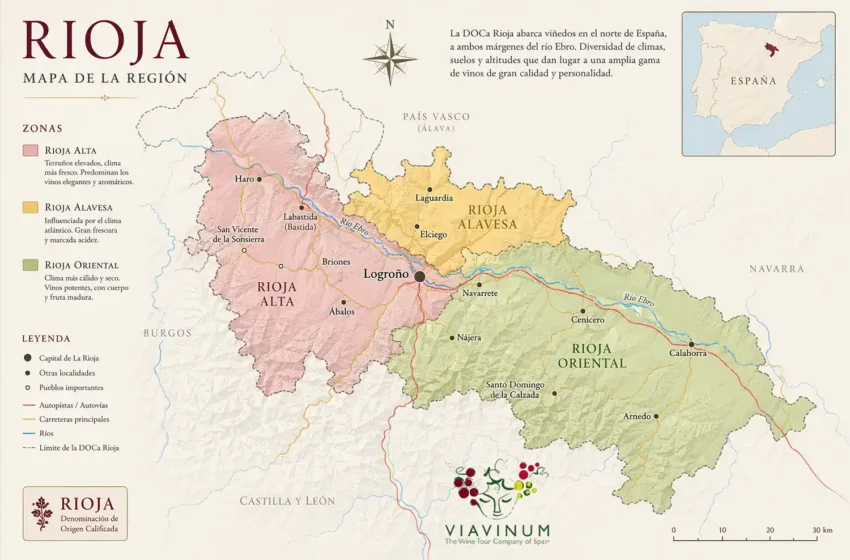
The Rioja wine region is Spain’s most iconic wine destination, known worldwide for its high-quality red wines, stunning vineyard landscapes, and rich cultural heritage. Located in northern Spain along the Ebro River, Rioja offers a perfect mix of wine tourism, gastronomy, and history, making it an ideal destination for both wine lovers and travelers seeking authentic experiences.
What Is the Rioja Wine Region?
The Rioja wine region is one of Spain’s most prestigious wine-producing areas, officially recognized as a Denomination of Origin (DOCa). While it shares its name with the autonomous community of La Rioja, the wine region actually extends beyond it into parts of the Basque Country and Navarre.
Covering more than 65,000 hectares of vineyards, the region follows the Ebro River valley, benefiting from a unique combination of Atlantic and Mediterranean climates. This diversity allows the production of a wide range of wine styles, although Rioja is especially famous for its elegant and age-worthy red wines.
Why Visit the Rioja Wine Region?
Visiting the Rioja wine region is much more than just tasting wine. It is a complete travel experience that combines:
- World-class wineries (both traditional and modern)
- Beautiful vineyard landscapes
- Historic villages and monasteries
- Exceptional gastronomy and tapas culture
The region is also one of the best places in Spain for wine tourism, offering guided tastings, vineyard tours, and unique wine-related experiences. Whether you are planning a weekend getaway or a longer holiday, Rioja provides endless opportunities to explore.
Rioja Wine Region Sub-Regions Explained
The Rioja wine region is divided into three main sub-regions, each with its own characteristics and wine styles.
Rioja Alta
Rioja Alta is known for producing some of the most balanced and elegant wines in the region. The climate here is slightly cooler, which helps create wines with bright acidity and great aging potential.
This area is also home to some of the most famous wineries and towns like Haro, often considered the wine capital of Rioja.
Rioja Alavesa
Located in the Basque Country, Rioja Alavesa is the smallest sub-region but one of the most picturesque. Its vineyards sit at higher altitudes, resulting in wines with intense fruit flavors and excellent structure.
Charming medieval villages like Laguardia make this area especially attractive for visitors combining wine and culture.
Rioja Oriental
Rioja Oriental has a warmer, more Mediterranean climate, which produces fuller-bodied and fruit-forward wines. This sub-region is known for its higher yields and richer wine styles, often with higher alcohol content.
Although less visited, it offers a more authentic and less crowded experience for those exploring the Rioja wine region.
Rioja Wine Styles and Grapes
The Rioja wine region is best known for its red wines, primarily made from the Tempranillo grape. However, several other grape varieties are also used:
Red Grapes:
- Tempranillo (the dominant variety)
- Garnacha
- Graciano
- Mazuelo
White Grapes:
- Viura
- Malvasía
- Garnacha Blanca
Rioja wines are also classified based on aging:
- Joven – צעvenes, fresh and young wines
- Crianza – aged for at least 2 years
- Reserva – aged longer, with more complexity
- Gran Reserva – top-tier wines aged for extended periods
This classification system is one of the defining features of the Rioja wine region, helping consumers understand the style and quality of the wine.
Top Things to Do in Rioja Wine Region
There are plenty of activities to enjoy in the Rioja wine region, beyond wine tasting:
1. Visit Wineries
From historic cellars to avant-garde architectural icons, Rioja offers a wide variety of wineries. Some are family-owned, while others are internationally renowned.
2. Explore Wine Villages
Discover charming towns like Haro, Laguardia, and Logroño, each offering unique experiences, from wine bars to cultural landmarks.
3. Enjoy Tapas and Local Cuisine
Rioja is famous for its tapas culture (locally known as pinchos). Pairing local dishes with Rioja wine is a must.
4. Discover Historical Sites
Visit monasteries such as San Millán de la Cogolla or walk sections of the Camino de Santiago.
5. Take a Wine Tour
Guided tours are one of the best ways to explore the region without worrying about transportation while enjoying wine tastings.
How Many Days Do You Need in Rioja?
To fully experience the Rioja wine region, a stay of 2 to 3 days is ideal. This allows enough time to:
- Visit several wineries
- Explore different sub-regions
- Enjoy local gastronomy
- Discover cultural and historical sites
If you have more time, you can dive deeper into the region’s hidden gems and lesser-known wineries.
Rioja Wine Tourism: A Unique Experience
Wine tourism in the Rioja wine region has grown significantly in recent years. Today, visitors can enjoy:
- Boutique winery experiences
- Luxury wine hotels
- Wine museums
- Vineyard picnics and tastings
Modern architecture has also played a key role in attracting visitors, with some wineries designed by world-famous architects.
What region is Rioja wine in?
The Rioja wine region is located in northern Spain and is one of the most famous wine-producing areas in the country. It stretches along the Ebro River and spans across three autonomous communities: La Rioja, the Basque Country, and Navarre. Although many people assume that Rioja wine comes only from the La Rioja administrative region, the truth is that the Rioja wine region is larger and more diverse geographically.
This wine region benefits from a unique combination of climates, including Atlantic, Continental, and Mediterranean influences. These climatic variations play a crucial role in shaping the character of Rioja wines, allowing winemakers to produce a wide range of styles, from fresh and fruity to complex and age-worthy.
The Rioja wine region is divided into three main sub-regions: Rioja Alta, Rioja Alavesa, and Rioja Oriental. Each of these areas contributes distinct characteristics to the wines. Rioja Alta is known for elegance and aging potential, Rioja Alavesa for structure and fruit intensity, and Rioja Oriental for fuller-bodied, warmer-climate wines.
Thanks to its long winemaking tradition and strict quality regulations, Rioja holds the prestigious DOCa (Denominación de Origen Calificada) status, the highest classification for wine regions in Spain. This guarantees consistent quality and authenticity.
Overall, the Rioja wine region is not just a place on the map but a symbol of Spanish wine culture, combining history, innovation, and exceptional terroir.
What is considered the best Rioja wine?
When discussing the best wines from the Rioja wine region, it is important to understand that “best” can vary depending on personal taste, budget, and occasion. However, traditionally, the highest-quality Rioja wines are considered to be Gran Reserva wines.
Gran Reserva wines represent the pinnacle of winemaking in the Rioja wine region. These wines are aged for at least five years, with a minimum of two years in oak barrels and the rest in bottle. This extended aging process results in complex, refined wines with notes of dried fruit, spice, leather, and vanilla.
Another category often considered among the best is Reserva, which also offers excellent balance between fruit and oak aging, typically at a more accessible price point. Many wine enthusiasts prefer Reserva wines because they combine complexity with freshness.
In terms of grape varieties, the finest wines from the Rioja wine region are usually based on Tempranillo, sometimes blended with Garnacha, Graciano, or Mazuelo. The quality of the vineyard, winemaking techniques, and aging process all play a role in determining the final product.
It is also worth noting that some modern wineries in the Rioja wine region are producing high-end, single-vineyard wines that rival traditional Gran Reservas. These wines focus more on terroir expression and often use less oak, appealing to contemporary tastes.
Ultimately, the best Rioja wine depends on your preferences, but Gran Reserva wines remain the benchmark for excellence.
Is a Rioja like a Pinot Noir?
A common question among wine lovers is whether wines from the Rioja wine region are similar to Pinot Noir. While there are some similarities, they are generally quite different in style, structure, and flavor profile.
Pinot Noir is known for being light to medium-bodied, with high acidity, delicate tannins, and flavors of red fruits like cherry and raspberry. It often has an earthy and subtle character, especially in wines from regions like Burgundy.
In contrast, wines from the Rioja wine region, particularly those made from Tempranillo, tend to be medium to full-bodied with more structure and firmer tannins. Rioja wines often display flavors of red and dark fruits, along with notes of vanilla, spice, and sometimes tobacco due to oak aging.
However, younger Rioja wines or those with less oak influence can share some similarities with Pinot Noir, such as bright acidity and red fruit flavors. Rioja Alavesa wines, in particular, can sometimes feel more elegant and closer in style to Pinot Noir.
Despite these overlaps, the overall profile of the Rioja wine region wines is richer and more oak-influenced compared to Pinot Noir. Therefore, while they may occasionally resemble each other, they are distinct wine styles.
If you enjoy Pinot Noir, you might appreciate certain Rioja wines, but they will offer a different experience.
What wine is close to Rioja?
If you are looking for wines similar to those from the Rioja wine region, there are several alternatives from around the world that share comparable characteristics, particularly in terms of structure, grape varieties, or aging methods.
One of the closest comparisons is Ribera del Duero, another prestigious Spanish wine region. Like Rioja, Ribera del Duero focuses on Tempranillo-based wines, but they tend to be more powerful and intense, with higher alcohol and darker fruit flavors.
Other Spanish regions such as Toro and Priorat also produce bold red wines, although they are generally stronger and less subtle than those from the Rioja wine region.
Outside Spain, wines from Bordeaux (especially those based on Cabernet Sauvignon and Merlot) can be somewhat similar due to their use of oak aging and structured profiles. Italian wines like Chianti Classico, made primarily from Sangiovese, can also offer comparable acidity and food-friendly characteristics.
In the New World, some Tempranillo wines from regions like California or Argentina attempt to replicate the style of the Rioja wine region, though they often have a more fruit-forward profile.
Ultimately, while there are many wines that share similarities with Rioja, each region has its own identity, and Rioja remains unique in its balance of fruit, oak, and elegance.
What is the best wine for diabetics to drink?
For individuals managing diabetes, choosing the right wine involves paying attention to sugar content, alcohol levels, and portion size. While moderation is key, some wines from the Rioja wine region can be suitable options when consumed responsibly.
Dry wines are generally the best choice for diabetics because they contain very low residual sugar. Most red wines from the Rioja wine region, especially those labeled as Crianza, Reserva, or Gran Reserva, are dry and therefore lower in sugar compared to sweet wines.
Red wines also contain polyphenols, which may have potential benefits for heart health. However, it is important to note that alcohol can still affect blood sugar levels, so careful monitoring is essential.
Wines to avoid include sweet or semi-sweet wines, as well as those with higher residual sugar. Sparkling wines labeled as “brut” can be a better alternative if you prefer something bubbly.
When enjoying wines from the Rioja wine region, portion control is crucial. A standard glass (around 150 ml) is typically recommended, and it is best consumed with food to help stabilize blood sugar levels.
It is always advisable for individuals with diabetes to consult with a healthcare professional before including wine in their diet. While Rioja wines can be enjoyed, they should be part of a balanced and controlled lifestyle.
What other wine is like Rioja?
Wines similar to those from the Rioja wine region can be found in various parts of the world, especially in regions that produce structured, oak-aged red wines.
One of the most comparable options is Ribera del Duero, which also uses Tempranillo as its main grape. While these wines are often more powerful, they share a similar aging philosophy.
In France, Bordeaux wines can resemble those from the Rioja wine region due to their use of oak and structured profiles. However, Bordeaux blends typically include Cabernet Sauvignon and Merlot, giving them a different flavor profile.
Italian wines like Chianti or Brunello di Montalcino can also offer similarities, particularly in their balance of acidity and tannins, making them excellent food wines.
In the New World, regions such as California, Chile, and Argentina produce Tempranillo wines inspired by the Rioja wine region, though they often emphasize fruit over oak aging.
Although these wines share certain traits, Rioja stands out for its unique combination of tradition, classification system, and terroir-driven diversity.
What is the best red Spanish wine?
Spain produces a wide variety of outstanding red wines, but many experts consider wines from the Rioja wine region to be among the best. Rioja has built an international reputation for quality, consistency, and age-worthy wines.
The best red Spanish wine often depends on personal preference, but Rioja Gran Reserva wines are frequently regarded as top-tier options. These wines are known for their complexity, elegance, and ability to age for decades.
Other regions also produce exceptional red wines. Ribera del Duero is known for powerful and intense Tempranillo wines, while Priorat offers bold, mineral-driven wines made from Garnacha and Cariñena.
Despite this competition, the Rioja wine region remains a benchmark for Spanish red wine, thanks to its balance of fruit, acidity, and oak aging. Its classification system also helps consumers easily identify quality levels.
For many wine lovers, Rioja represents the perfect introduction to Spanish wines and continues to be a favorite worldwide.
Towns in Rioja wine region
The Rioja wine region is not only famous for its wines but also for its charming towns and villages, each offering a unique blend of culture, history, and gastronomy. Exploring these towns is one of the best ways to experience the authentic spirit of Rioja beyond the vineyards.
One of the most popular towns in the Rioja wine region is Logroño, the capital of La Rioja. It is especially known for Calle Laurel, a vibrant street filled with tapas bars where visitors can enjoy local cuisine paired with Rioja wines. Logroño is also a key stop along the Camino de Santiago, adding historical significance to its appeal.
Another must-visit destination is Haro, often referred to as the wine capital of Rioja. Haro is home to some of the most prestigious wineries in the Rioja wine region, many of which are located close together, making it easy to visit several in one day.
Laguardia, located in Rioja Alavesa, is one of the most picturesque medieval villages in the Rioja wine region. With its narrow streets, underground wine cellars, and stunning views over the vineyards, it offers a truly memorable experience.
Other notable towns include Santo Domingo de la Calzada, known for its connection to the Camino de Santiago, and smaller villages scattered throughout the region that provide a more intimate and authentic atmosphere.
Rioja wine region from San Sebastian
Visiting the Rioja wine region from San Sebastián is one of the most popular day trips in northern Spain. The distance between San Sebastián and Rioja is approximately 160 km, making it easily accessible by car in about 2 hours.
This journey is particularly appealing because it allows travelers to combine two of Spain’s greatest attractions: world-class gastronomy in San Sebastián and exceptional wines in the Rioja wine region. Many visitors choose guided tours to avoid driving and to fully enjoy wine tastings throughout the day.
Most tours from San Sebastián focus on Rioja Alavesa, the closest sub-region. This area offers stunning vineyard landscapes and charming villages like Laguardia, making it ideal for a day trip. Visitors typically explore one or two wineries, enjoy guided tastings, and learn about the winemaking process.
For those traveling independently, renting a car provides flexibility to explore different parts of the Rioja wine region at your own pace. However, it is important to plan winery visits in advance, as many require reservations.
Whether you choose a guided tour or a self-drive experience, visiting the Rioja wine region from San Sebastián is a highly rewarding experience that combines culture, scenery, and exceptional wines.
Rioja wine region from Madrid
Traveling to the Rioja wine region from Madrid is a fantastic option for those looking to explore Spain’s most famous wine destination. The distance is حوالي 320 km, and the journey typically takes around 3 to 4 hours by car.
There are several ways to reach the Rioja wine region from Madrid. Driving is the most flexible option, allowing you to stop along the way and explore different areas. Alternatively, you can take a train or bus to cities like Logroño or Haro, which are key locations within the region.
Many travelers opt for organized wine tours departing from Madrid. These tours often include transportation, winery visits, tastings, and expert guides, making them a convenient and stress-free way to experience the Rioja wine region.
If you have limited time, a 2-day trip is ideal to fully enjoy the region. This allows you to visit multiple wineries, explore local towns, and experience the gastronomy. For a more relaxed experience, a 3-day itinerary is highly recommended.
The journey from Madrid to the Rioja wine region offers a transition from the bustling capital to peaceful vineyard landscapes, making it a perfect getaway for wine lovers.
Rioja red wine
Rioja red wine is the most iconic product of the Rioja wine region and one of Spain’s most recognized exports worldwide. These wines are primarily made from the Tempranillo grape, which gives them their characteristic balance of fruit, acidity, and structure.
What makes Rioja red wine unique is its aging process. Wines are often matured in oak barrels, which adds complex flavors such as vanilla, spice, and toasted notes. Depending on the aging time, Rioja red wines are classified into Joven, Crianza, Reserva, and Gran Reserva.
The style of Rioja red wine can vary depending on the sub-region within the Rioja wine region. For example, Rioja Alta tends to produce more elegant and refined wines, while Rioja Oriental offers fuller-bodied and fruit-forward styles.
These wines are incredibly versatile when it comes to food pairing. Rioja red wine pairs perfectly with grilled meats, lamb, cured cheeses, and traditional Spanish dishes. Its balanced profile also makes it approachable for both beginners and experienced wine enthusiasts.
Overall, Rioja red wine represents the essence of the Rioja wine region, combining tradition, quality, and a distinctive flavor profile that has made it famous around the world.
Rioja wine region tours
Exploring the Rioja wine region through guided tours is one of the best ways to fully experience everything this iconic destination has to offer. Wine tours provide access to top wineries, expert knowledge, and curated experiences that are difficult to organize independently.
There are many types of tours available in the Rioja wine region, ranging from half-day visits to multi-day immersive experiences. Most tours include transportation, winery visits, wine tastings, and sometimes food pairings or vineyard walks.
Guided tours are especially recommended for those who want to enjoy wine without worrying about driving. Local guides offer valuable insights into the history, winemaking process, and unique characteristics of the Rioja wine region.
Private tours are also an excellent option for a more personalized experience. These tours can be tailored to your preferences, including visits to boutique wineries, luxury experiences, or gastronomy-focused itineraries.
If you are planning your visit and want a seamless and unforgettable experience in the Rioja wine region, 👉 click here to discover the best tour options available.
