

Tours & Tuscany Travel Tips

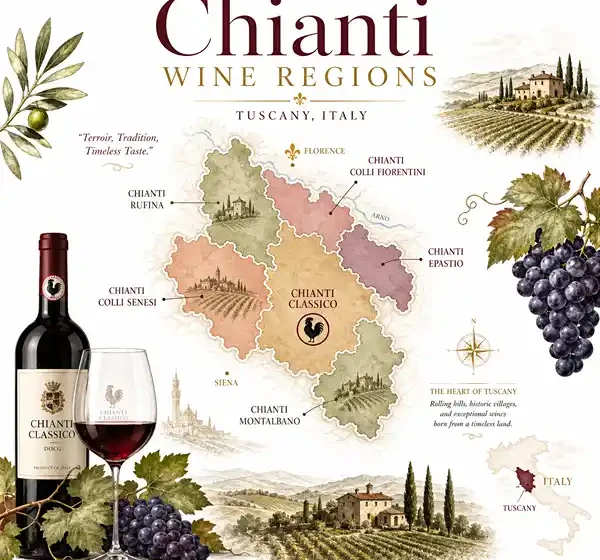
The Chianti wine region is one of the most iconic wine destinations in Italy and one of the most celebrated wine-producing areas in the world. Located in the heart of Tuscany between Florence and Siena, Chianti is known for its rolling hills, medieval villages, olive groves, and exceptional red wines made primarily from Sangiovese grapes. Whether you are planning a wine tour in Tuscany or simply want to understand why Chianti wines are so beloved, this guide will help you discover everything about this extraordinary region.
What Is the Chianti Wine Region?
The Chianti wine region is a large wine-producing area in Tuscany, central Italy. It stretches across beautiful countryside landscapes filled with vineyards, castles, cypress-lined roads, and historic villages. Chianti is internationally famous for producing elegant red wines with vibrant acidity, savory aromas, and excellent food-pairing qualities.
At the center of the region lies Chianti Classico, considered the historic and most prestigious part of Chianti production. This area sits between Florence and Siena and is recognized by the famous Black Rooster symbol, known in Italian as the Gallo Nero.
Chianti wines are primarily made from Sangiovese grapes, which give the wine its characteristic flavors of sour cherry, herbs, spice, leather, and earthy notes. Depending on the subregion, aging process, and winemaking style, Chianti wines can range from fresh and easy-drinking to complex and age-worthy.
The History of the Chianti Wine Region
The history of the Chianti wine region dates back thousands of years. Wine production in this part of Tuscany began during the Etruscan civilization between the 7th and 10th centuries BC. Later, Roman influence and medieval monasteries helped preserve and expand viticulture throughout the region.
The name “Chianti” first appeared in historical records around the 8th century. However, the region gained true recognition during the Renaissance period, when noble Florentine families invested heavily in vineyards and wine production.
One of the most important moments in the history of the Chianti wine region occurred in 1716, when Cosimo III de’ Medici officially established the boundaries of the original Chianti production area. Many wine historians consider this one of the earliest examples of wine appellation laws in the world.
Today, the Chianti region remains a symbol of Tuscan culture, tradition, gastronomy, and wine excellence.
Chianti Wine and Sangiovese Grapes
The soul of the Chianti wine region is Sangiovese. This grape variety thrives in Tuscany’s warm climate and mineral-rich soils, producing wines with refreshing acidity and layered aromas.
Typical tasting notes in Chianti wines include:
- Sour cherry
- Red berries
- Dried oregano
- Violet
- Tobacco
- Leather
- Balsamic vinegar
- Smoke
- Espresso
Sangiovese is naturally high in acidity and tannins, making Chianti wines incredibly food-friendly. While Sangiovese dominates the blend, other grapes such as Canaiolo, Colorino, Cabernet Sauvignon, and Merlot can also be included in certain wines.
The terroir of the Chianti wine region greatly influences the style of wine produced. Vineyards located at higher elevations often create more elegant and aromatic wines, while warmer zones produce fuller-bodied expressions.
Chianti vs Chianti Classico
Many travelers confuse Chianti with Chianti Classico, but there is an important difference.
The broader Chianti wine region includes several subzones spread across Tuscany. Chianti Classico, however, refers specifically to the historic central production area between Florence and Siena.
Chianti Classico wines generally follow stricter production rules and are often considered higher quality. These wines must contain at least 80% Sangiovese and are recognized by the Black Rooster seal on the bottle neck.
Chianti Classico wines are typically more structured, complex, and suitable for aging compared to standard Chianti wines.
The main subregions of the Chianti wine region include:
- Chianti Classico
- Chianti Rufina
- Colli Senesi
- Colli Fiorentini
- Colline Pisane
- Montespertoli
- Montalbano
- Colli Aretini
Each area offers unique terroirs and distinct wine styles.
Visiting the Chianti Wine Region
Exploring the Chianti wine region is one of the best experiences in Tuscany. The landscape itself feels like a postcard, with vineyard-covered hills, ancient stone villages, and scenic roads connecting wineries and historic estates.
Popular towns to visit include:
Greve in Chianti
Often considered the gateway to Chianti, Greve is famous for its charming piazza, wine shops, and traditional Tuscan atmosphere.
Radda in Chianti
Radda is one of the most authentic villages in the Chianti Classico area. Surrounded by vineyards and medieval walls, it offers exceptional wine tastings and panoramic countryside views.
Castellina in Chianti
This historic hilltop town combines Etruscan history with excellent local wineries and traditional Tuscan restaurants.
San Gimignano
Although technically outside the central Chianti Classico area, San Gimignano is frequently included in wine itineraries thanks to its famous medieval towers and nearby vineyards.
Wine lovers visiting the Chianti wine region can enjoy:
- Winery tours
- Private tastings
- Vineyard walks
- Cooking classes
- Olive oil tastings
- Luxury wine experiences
- Scenic countryside drives
A guided wine tour is often the best way to fully experience the region while learning about local traditions and winemaking techniques.
Food Pairing in the Chianti Wine Region
One reason the Chianti wine region is so popular is the incredible connection between its wines and Tuscan cuisine.
Chianti’s bright acidity and savory character make it extremely versatile at the table. The wines pair beautifully with tomato sauces, cured meats, grilled meats, and aged cheeses.
Some of the best food pairings include:
Bistecca alla Fiorentina
This legendary Tuscan steak is one of the ultimate pairings with Chianti Classico. The wine’s acidity cuts through the richness of the meat perfectly.
Pasta with Wild Boar Ragù
The earthy flavors of wild boar sauce complement the spicy and herbal notes of Chianti wines.
Tuscan Charcuterie
Finocchiona salami, pecorino cheese, and rustic Tuscan bread create a classic Chianti aperitivo experience.
Ribollita
This traditional Tuscan vegetable and bread soup pairs beautifully with medium-bodied Chianti wines.
Why the Chianti Wine Region Is So Special
The Chianti wine region is much more than just a wine destination. It represents the essence of Tuscany itself: breathtaking landscapes, centuries of tradition, exceptional gastronomy, and a slower, authentic lifestyle.
Few wine regions in the world combine history, culture, architecture, food, and wine as naturally as Chianti. Every village, vineyard, and winery tells a story that has evolved over generations.
Whether you are a wine enthusiast, a casual traveler, or someone dreaming of discovering Tuscany for the first time, the Chianti wine region offers an unforgettable experience filled with beauty, flavor, and tradition.
What is special about Chianti wine?
Chianti wine is special because it captures the character of Tuscany in a glass. Produced mainly from Sangiovese grapes, Chianti is known for its bright acidity, savory aromas, and elegant structure, making it one of Italy’s most food-friendly red wines. Unlike heavier reds, Chianti often feels fresh and vibrant, with flavors of sour cherry, red plum, dried herbs, tobacco, leather, and sometimes balsamic notes. This balance of fruit, acidity, and earthy complexity is what makes it so distinctive.
Another reason Chianti wine is unique is its deep connection to the Chianti wine region, one of the most historic wine areas in Italy. The vineyards are surrounded by rolling hills, olive groves, medieval villages, and ancient castles, creating a landscape where wine, food, and culture are inseparable. Chianti is not just a drink; it is part of the Tuscan lifestyle.
Chianti also stands out because of its versatility. It pairs beautifully with tomato-based pasta, pizza, grilled meats, Tuscan soups, aged cheeses, and the famous Bistecca alla Fiorentina. Its natural acidity helps cut through rich foods while enhancing savory flavors.
For travelers, Chianti is special because visiting the region means experiencing authentic Tuscany: family-owned wineries, scenic countryside roads, traditional cuisine, and centuries-old winemaking traditions. Whether enjoyed as a simple everyday wine or as a complex Chianti Classico Riserva, Chianti remains one of the most recognizable and beloved wines in the world.
What are the 7 regions of Chianti?
The broader Chianti wine region is divided into several subzones, each with its own landscape, climate, and wine style. Traditionally, the seven main subregions of Chianti are Chianti Rufina, Chianti Colli Fiorentini, Chianti Colli Senesi, Chianti Colli Aretini, Chianti Colline Pisane, Chianti Montalbano, and Chianti Montespertoli. In addition, Chianti Classico is the historic heart of the region and is often treated separately because of its prestige and stricter production rules.
Each subregion gives a slightly different expression of Sangiovese, the main grape used in Chianti wines. Chianti Rufina, located east of Florence, is often known for producing elegant and age-worthy wines. Colli Fiorentini surrounds Florence and offers accessible, food-friendly Chianti styles. Colli Senesi, near Siena, is one of the largest subzones and produces wines that can be soft, approachable, and expressive.
Colline Pisane lies closer to Pisa and can produce lighter, fresher wines. Colli Aretini is located near Arezzo and is known for easy-drinking Chianti. Montalbano sits northwest of Florence, while Montespertoli is a smaller area with its own identity and growing reputation.
For wine travelers, understanding these subregions makes a visit to the Chianti wine region more rewarding. Instead of seeing Chianti as one single wine style, it is better to think of it as a mosaic of Tuscan terroirs, where soil, altitude, climate, and tradition shape every bottle.
Where is the town of Chianti in Italy?
There is no single official town called “Chianti” in Italy. Instead, Chianti refers to a historic wine-producing area in Tuscany, located mainly between Florence and Siena. When people talk about visiting Chianti, they usually mean exploring the countryside, villages, vineyards, and wineries of the Chianti wine region, especially the Chianti Classico area.
Some of the most famous towns and villages associated with Chianti include Greve in Chianti, Radda in Chianti, Castellina in Chianti, Gaiole in Chianti, and Panzano in Chianti. These places are among the best destinations for travelers who want to experience authentic Tuscan wine culture.
Greve in Chianti is often considered the gateway to the region from Florence. It has a charming main square, wine shops, restaurants, and easy access to nearby wineries. Radda in Chianti is a beautiful medieval village surrounded by vineyards and panoramic views. Castellina in Chianti offers a mix of history, wine cellars, and countryside scenery, while Gaiole is known for historic estates and castles.
The Chianti area is easy to reach from both Florence and Siena, making it ideal for a day trip or a longer wine holiday. A visit usually includes scenic drives, winery tastings, traditional Tuscan meals, and walks through medieval villages. So, while there is no single “town of Chianti,” there are many beautiful Chianti towns worth discovering.
What are the big three Italian wines?
The “big three” Italian wines are usually considered to be Barolo, Brunello di Montalcino, and Amarone della Valpolicella. These wines are famous for their quality, aging potential, structure, and international reputation. However, Chianti, especially Chianti Classico, is also one of Italy’s most important and historic wines.
Barolo comes from Piedmont in northern Italy and is made from Nebbiolo grapes. It is powerful, complex, tannic, and often described as one of Italy’s greatest red wines. Brunello di Montalcino comes from Tuscany and is made entirely from Sangiovese, locally known as Sangiovese Grosso. It is elegant, structured, and capable of aging for many years. Amarone della Valpolicella comes from Veneto and is made using partially dried grapes, creating a rich, bold, full-bodied red wine.
Chianti belongs in the conversation because it is one of the most recognizable Italian wines in the world. The Chianti wine region has shaped the image of Tuscan wine internationally and offers everything from fresh, everyday bottles to premium Chianti Classico Riserva and Gran Selezione wines.
For wine lovers visiting Italy, comparing Chianti with Barolo, Brunello, and Amarone is a fascinating way to understand the diversity of Italian wine. While the “big three” are often associated with power and prestige, Chianti stands out for its balance, food pairing ability, accessibility, and deep Tuscan identity.
Is Chianti considered a cheap wine?
Chianti can be affordable, but it should not simply be considered a cheap wine. Because the Chianti wine region is large and produces many different styles, prices can vary significantly. Some basic Chianti wines are inexpensive and made for everyday drinking, while high-quality Chianti Classico Riserva or Gran Selezione wines can be complex, elegant, and much more expensive.
The idea that Chianti is cheap partly comes from its history. For many years, Chianti was widely exported in straw-covered bottles called fiaschi, and some mass-produced versions became associated with simple table wine. However, modern Chianti has changed dramatically. Many producers now focus on quality, terroir, organic farming, lower yields, and careful aging.
A basic Chianti can be fresh, simple, and perfect for casual meals like pasta or pizza. A Chianti Classico, especially from a respected estate, usually offers more depth, structure, and balance. Riserva and Gran Selezione bottles are often aged longer and can show more complex aromas such as leather, tobacco, spice, balsamic, and dark cherry.
So, Chianti is not one single category of cheap wine. It is a broad and historic Tuscan wine family with options for different budgets. For travelers and wine lovers, the best way to appreciate Chianti is to taste several styles directly in the region.
Is a Chianti dry or sweet?
Chianti is a dry red wine. Although it often has fruity aromas of cherry, red plum, or berries, this does not mean it is sweet. In wine language, “dry” means that most of the grape sugar has been converted into alcohol during fermentation. Chianti wines are therefore not sugary, but they can still taste fruity, juicy, and expressive.
The main grape in Chianti is Sangiovese, which naturally produces wines with high acidity, medium body, and firm tannins. This gives Chianti its refreshing and slightly savory personality. Typical flavors include sour cherry, dried herbs, violet, leather, tobacco, spice, and sometimes earthy or balsamic notes.
Because Chianti is dry and acidic, it pairs especially well with food. Tomato-based dishes, pizza, grilled meats, cured meats, pecorino cheese, and Tuscan soups all work beautifully with Chianti. The wine’s acidity balances rich sauces and fatty ingredients, while its tannins complement meat and cheese.
In the Chianti wine region, most wines are made to be enjoyed with meals rather than as sweet sipping wines. Some styles are young and fresh, while others are aged and more complex, but they remain dry. Travelers visiting Tuscany will usually find Chianti served alongside traditional local dishes, which is the best way to understand its character.
Chianti wine price
The price of Chianti wine can vary widely depending on the producer, appellation, aging category, and overall quality. A simple bottle of Chianti can often be found at an accessible price, making it a popular everyday Italian red wine. These entry-level bottles are usually fresh, fruity, and ideal for casual meals such as pasta, pizza, or charcuterie. However, the Chianti wine region also produces much more complex and premium wines, especially within the Chianti Classico area.
A standard Chianti is usually less expensive than Chianti Classico because it can come from a broader production area. Chianti Classico wines, marked by the famous Black Rooster symbol, often cost more because they follow stricter production rules and usually come from vineyards in the historic heart of the region. Within Chianti Classico, prices rise further for Riserva and Gran Selezione wines, which require longer aging and are often made from the best grapes of an estate.
For travelers visiting Tuscany, the price of Chianti wine can also depend on the type of experience. A casual tasting at a small winery may be affordable, while a private cellar tour, food pairing, or luxury wine experience will naturally cost more. In general, Chianti offers excellent value because it combines history, tradition, landscape, and quality in a way that few wine regions can match.
The best approach is not to judge Chianti only by price. Instead, consider the appellation, producer, vintage, and style. A well-made Chianti can offer outstanding quality at a reasonable cost.
Chianti wine region tour
A Chianti wine region tour is one of the most memorable experiences for travelers visiting Tuscany. The region lies between Florence and Siena and is famous for its rolling hills, vineyards, olive groves, medieval villages, and historic wine estates. A tour through Chianti is not only about tasting wine; it is about discovering the culture, food, landscapes, and traditions that make Tuscany so unique.
Most Chianti wine tours include visits to local wineries where guests can learn how Sangiovese grapes are grown, harvested, fermented, and aged. Depending on the winery, visitors may walk through vineyards, explore old cellars, taste different styles of Chianti, and compare standard Chianti with Chianti Classico, Riserva, or Gran Selezione wines.
A good Chianti wine region tour often includes stops in villages such as Greve in Chianti, Radda in Chianti, Castellina in Chianti, Gaiole in Chianti, or Panzano. These towns offer charming streets, panoramic viewpoints, artisan shops, traditional restaurants, and plenty of opportunities to enjoy authentic Tuscan hospitality.
Food is another essential part of the experience. Many tours include pairings with pecorino cheese, cured meats, bruschetta, extra virgin olive oil, handmade pasta, or Bistecca alla Fiorentina. This helps visitors understand why Chianti is considered one of the best food wines in Italy.
A private or small-group tour is usually the best way to enjoy the Chianti wine region comfortably. It allows travelers to avoid driving, discover carefully selected wineries, and learn from local experts who can explain the history, terroir, and personality of each wine.
What varietal is Chianti made from
Chianti is made primarily from Sangiovese, the most important red grape variety in Tuscany. This grape is the heart and soul of the Chianti wine region, giving the wine its bright acidity, red fruit flavors, savory character, and firm structure. Sangiovese is responsible for the classic Chianti profile: sour cherry, red plum, dried herbs, violet, tobacco, leather, and earthy notes.
In most Chianti wines, Sangiovese must form the majority of the blend. Chianti Classico has even stricter rules and requires a high percentage of Sangiovese. This is one of the reasons Chianti Classico wines tend to express the grape’s personality so clearly. The grape responds strongly to terroir, meaning that soil, altitude, sun exposure, and climate all influence the final style of the wine.
Although Sangiovese is the main grape, Chianti can also include small amounts of other varieties. Traditional Tuscan grapes such as Canaiolo and Colorino may be used to add softness, color, or aromatic complexity. Some producers also include international grapes such as Merlot or Cabernet Sauvignon, depending on the style they want to create.
Sangiovese is naturally high in acidity and tannins, which makes Chianti an excellent wine for food pairing. It works especially well with tomato sauces, grilled meats, aged cheeses, and Tuscan dishes. Without Sangiovese, Chianti would lose its identity. This grape is what connects the wine to Tuscany, its landscape, and its long winemaking history.
Chianti wine taste
Chianti wine taste is usually fresh, dry, savory, and fruit-driven, with a strong identity shaped by Sangiovese grapes. The most typical flavors include sour cherry, red plum, raspberry, dried herbs, violet, tobacco, leather, spice, and sometimes balsamic or earthy notes. These flavors can vary depending on the subregion, producer, vintage, and aging style.
A young Chianti is often bright, lively, and easy to drink. It may show juicy red fruit, floral aromas, and a refreshing finish. These wines are ideal for casual meals and everyday pairings. More structured Chianti Classico wines usually have greater depth, with firmer tannins, more herbal complexity, and a longer finish.
Riserva and Gran Selezione wines from the Chianti wine region can taste more intense and layered. With longer aging, they may develop notes of dried cherry, leather, tobacco, cedar, vanilla, espresso, and sweet spice. These wines can be more elegant and suitable for special meals or aging.
One of the most important features of Chianti wine taste is acidity. Chianti is not a heavy, sweet, or jammy red wine. Instead, it is usually dry and refreshing, which makes it especially good with food. Its acidity works beautifully with tomato-based pasta, pizza, roasted meats, charcuterie, and Tuscan cuisine.
For many wine lovers, Chianti tastes like Tuscany itself: rustic yet elegant, fruity yet savory, simple enough to enjoy casually but complex enough to explore deeply.
What is Chianti wine similar to
Chianti wine is most similar to other Sangiovese-based wines from Tuscany, especially Brunello di Montalcino, Vino Nobile di Montepulciano, and Morellino di Scansano. These wines share some common characteristics because they are made mainly from Sangiovese or local clones of the same grape. Expect bright acidity, red cherry flavors, earthy notes, and excellent food-pairing ability.
Compared with Brunello di Montalcino, Chianti is usually lighter, fresher, and more approachable. Brunello is made from Sangiovese Grosso and often has more structure, depth, and aging potential. Vino Nobile di Montepulciano can be closer in style to Chianti, offering red fruit, spice, and savory complexity, but often with a slightly rounder profile.
Outside Italy, Chianti may remind some drinkers of Pinot Noir because both can show red fruit, acidity, and earthy aromas. However, Chianti usually has firmer tannins and a more savory, herbal character. It can also be compared to some lighter Tempranillo wines from Spain, particularly when oak aging adds notes of leather, spice, or tobacco.
The key difference is that Chianti has a distinctly Tuscan personality. The Chianti wine region produces wines that are dry, acidic, food-friendly, and often marked by flavors of sour cherry, herbs, balsamic, and earth.
If someone enjoys medium-bodied red wines that are not too heavy, not too sweet, and excellent with food, Chianti is a great choice. It offers complexity without being overwhelming and tradition without feeling old-fashioned.
Chianti white wine
Chianti is known today as a red wine, not a white wine. Modern Chianti wines are produced mainly from Sangiovese grapes, often blended with other red varieties such as Canaiolo, Colorino, Merlot, or Cabernet Sauvignon. When people refer to Chianti wine, they are almost always talking about a dry red wine from Tuscany.
Historically, however, white grapes did play a role in Chianti production. In older formulas, varieties such as Trebbiano and Malvasia could be included in the blend. This was part of traditional Tuscan winemaking for many years. Over time, quality standards changed, and the use of white grapes in Chianti Classico was eventually prohibited. Today, Chianti’s identity is firmly linked to red Sangiovese-based wines.
That said, the Chianti wine region and surrounding parts of Tuscany do produce white wines, but they are not labeled as Chianti in the same way. Travelers visiting the area may find local white wines made from varieties such as Vernaccia, Trebbiano, Malvasia, Vermentino, or Chardonnay, depending on the winery.
One of the most famous Tuscan white wines near the Chianti area is Vernaccia di San Gimignano, produced around the medieval town of San Gimignano. It is crisp, dry, and refreshing, making it a good contrast to the red wines of Chianti.
So, while Chianti itself is red, wine lovers visiting Tuscany can still enjoy excellent white wines nearby. A complete wine tour may include both Chianti reds and regional white wines for a broader taste of Tuscany.
Is Chianti a town or region
Chianti is a region, not a single town. More specifically, it is a historic wine-producing area in Tuscany, central Italy. The Chianti wine region stretches mainly between Florence and Siena and includes vineyards, olive groves, medieval villages, castles, and scenic countryside roads.
Many travelers search for “the town of Chianti,” but there is no official town simply called Chianti. Instead, there are several towns and villages with “in Chianti” in their names. Some of the most famous include Greve in Chianti, Radda in Chianti, Castellina in Chianti, and Gaiole in Chianti. These places are excellent bases for exploring wineries, tasting local wines, and enjoying traditional Tuscan food.
The confusion is understandable because Chianti is both a geographical area and a wine name. When you drink Chianti, you are drinking wine from this region. When you visit Chianti, you are exploring the countryside and villages where the wine is produced.
The most famous part of the region is Chianti Classico, located in the historic heartland between Florence and Siena. This area is known for high-quality wines, beautiful landscapes, and the Black Rooster symbol found on Chianti Classico bottles.
For visitors, thinking of Chianti as a region rather than a town makes planning easier. A proper Chianti itinerary usually includes several villages, wineries, panoramic viewpoints, and traditional restaurants rather than just one destination.
